Cañete: The Discovery of a Treasure in Cuenca
The province of Cuenca houses countless treasures, but few places are as interesting as the town of Cañete. After a previous series on the technical challenges of landscape photography under dark gray skies and inclement winter weather, the time has come to delve into the town itself.
The Melancholic Atmosphere of Winter
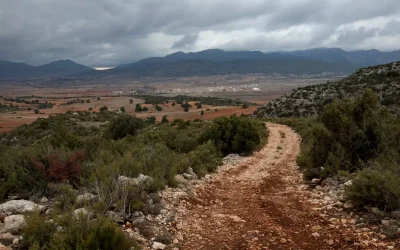
The weather conditions during this visit were far from optimal. The cold was biting, and the sky was covered by a threatening gray veil that was only occasionally broken by a sparse clearing. The result was an atypical report in which the melancholy of the weather enhanced the raw essence of Cañete. Located just over a hundred kilometers from Madrid and a short distance from the city of Cuenca, Cañete presents itself as an ideal destination for travelers looking to escape the crowds and find an authentic combination of history and nature.
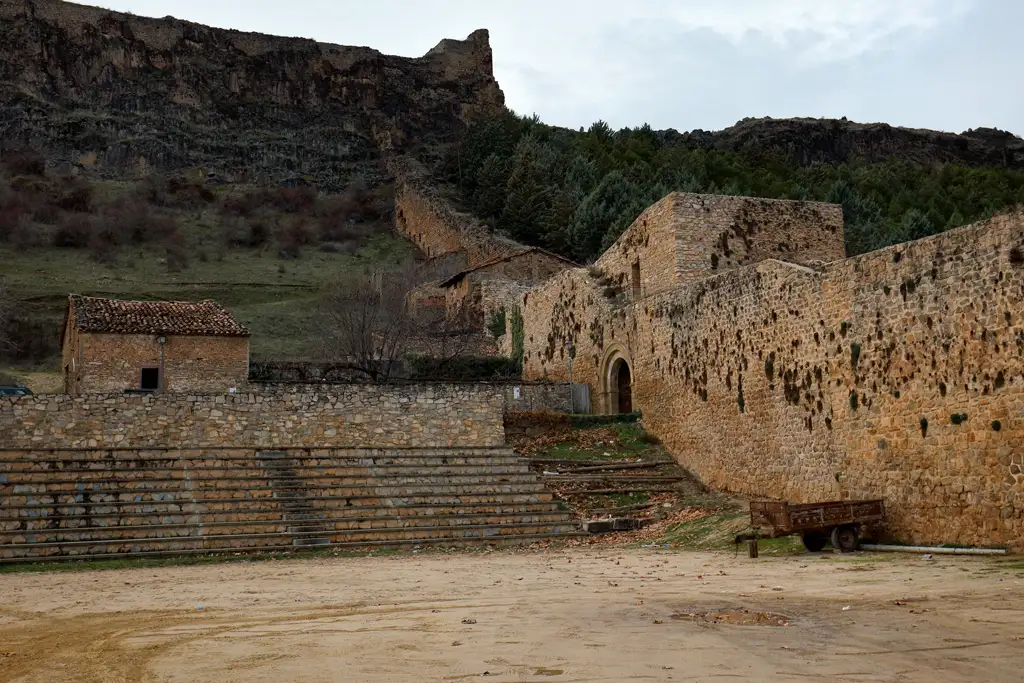
Wall of Islamic origin in Cañete and the gate of San Bartolomé
The Legacy of the Islamic Era
When you see Cañete for the first time, your gaze is immediately drawn to its impressive walls of Muslim origin. These walls form a stone belt that still tightly embraces the old town today, attesting to the strategic importance this place held for centuries. The defensive architecture is not just a vestige of the past but continues to define the atmosphere and layout of the town. On one hand, this historical barrier offers a sense of security and seclusion; on the other, the constant murmur of the water and the lush valleys surrounding the town invite a state of deep peace and relaxation. It is this duality between the hard, implacable stone and the soft, living nature that makes the first impression of Cañete so special.
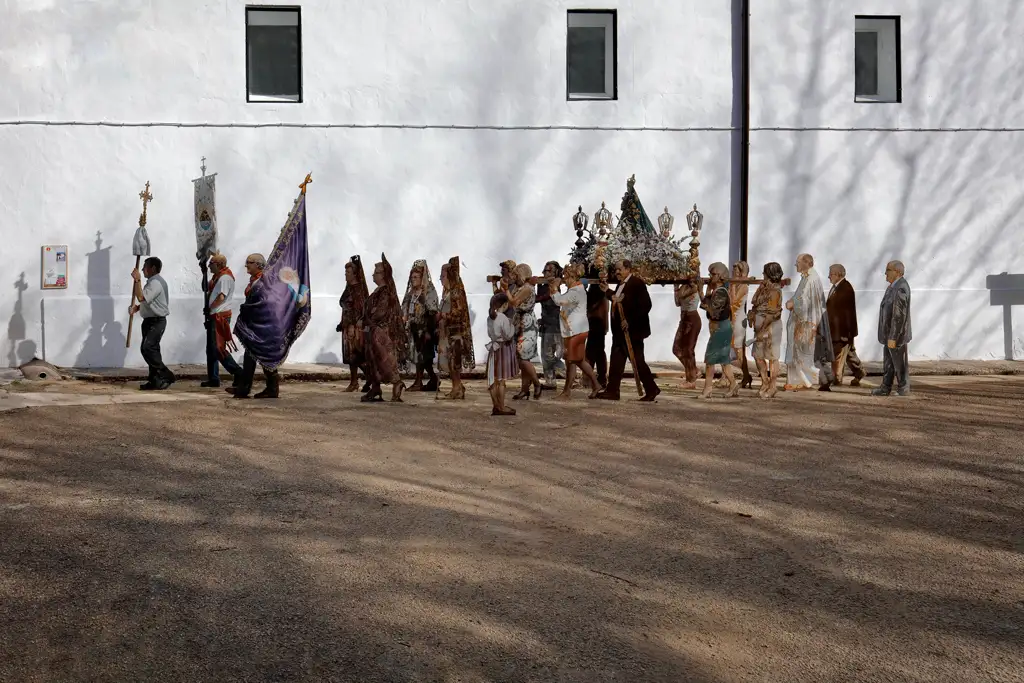
Statue of a procession in front of the chapel of the Virgin of La Zarza
A Multicultural Heritage Among Narrow Streets
Inside its walls, the town surprises the visitor with a rich and varied heritage hidden among its narrow cobblestone streets. Architectural gems like the Church of San Julián (17th century) and the cozy Chapel of the Virgen de la Zarza recall the religious devotion that has prevailed here throughout the centuries. Also noteworthy is the characteristic arch of the old synagogue, an element that refers to Spain’s multicultural past, where different beliefs left their mark on the urban landscape. The heart of social life is found in the Plaza Mayor. This square, with its characteristic porticoes and strictly medieval layout, is undoubtedly one of the most picturesque spots in the entire province. Here, time seems to stand still, allowing a glimpse of what life must have been like hundreds of years ago.
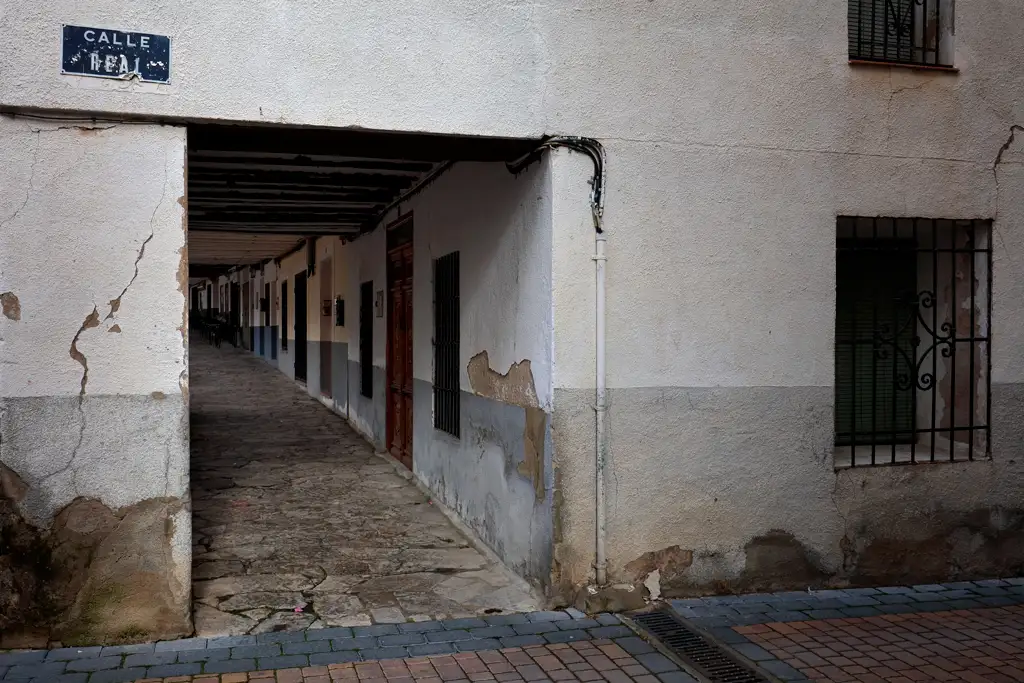
Medieval arcades of the Plaza Mayor
Nature as a Defensive Fortress
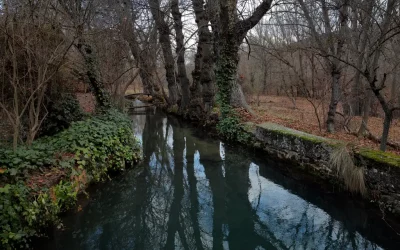
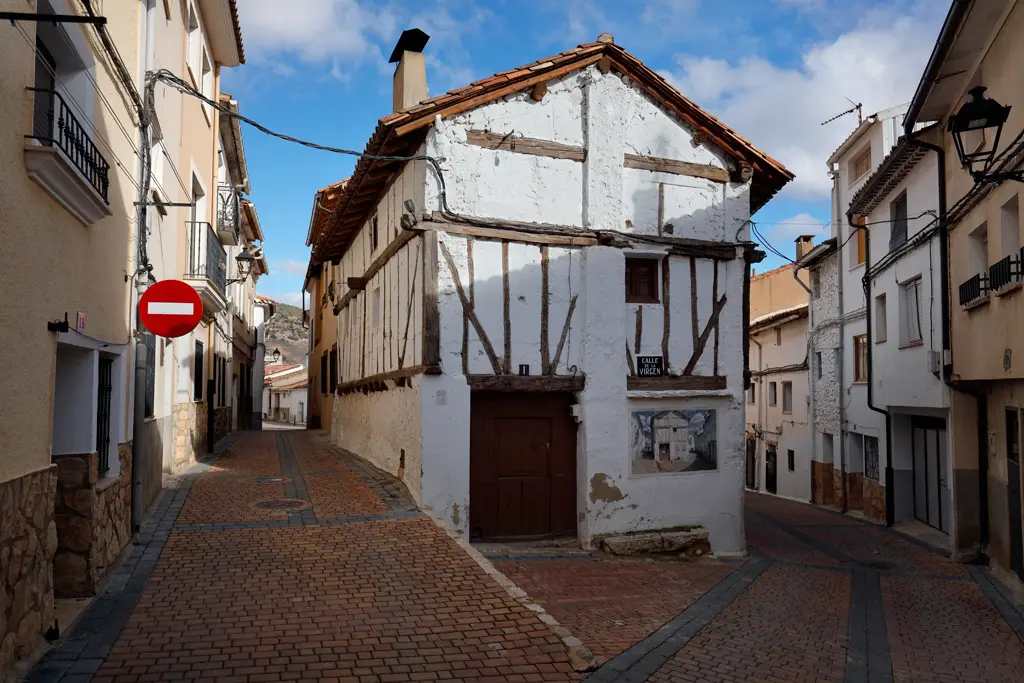
Beyond the history etched in stone, it is the natural environment that gives Cañete its unique character. The waterfall of the Río de la Virgen (also called Río Tinte) is a spectacle hidden in the Paraje de El Postigo among the rocks. The water plunges here with force, creating one of the most beautiful landscapes in the Serranía de Cuenca. For those seeking a broader perspective, La Picota functions as a natural balcony. From this viewpoint, there is an impressive view of the town’s rooftops and the vast valleys extending to the horizon. It is interesting to observe how Cañete has maintained its defensive structure; the river acts at various points as a natural moat, reinforcing the historical integrity of the walled town. Ancient access gates such as San Bartolomé and the Puerta de la Virgen mark the threshold into a world that proudly preserves its essence.

The Gate of the Virgin one of the three entrance gates
La Alvarada: The Rebirth of History
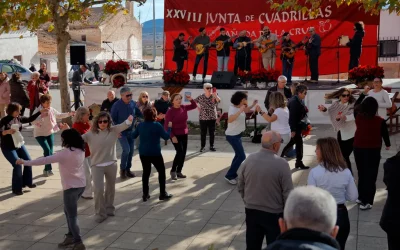
A trip to Cañete is more than a tourist excursion; it is an exploration of a place that has not yet been swallowed by mass tourism. This sense of authenticity is reinforced by cultural events like La Alvarada. This annual festival, usually held in late July or early August, is the highlight of the local calendar. Since its inception in 1999, La Alvarada has aimed to keep the special historical events of Cañete alive. The festival revolves around Don Álvaro de Luna, the most prominent historical figure the town has contributed to history. The quality of this event has not gone unnoticed outside local borders: in 2000, Cañete received the First Prize for Tourism of Castilla-La Mancha, and in 2014, the festival was declared an Event of Regional Touristic Interest.

The Contrast Between Art and Neglect
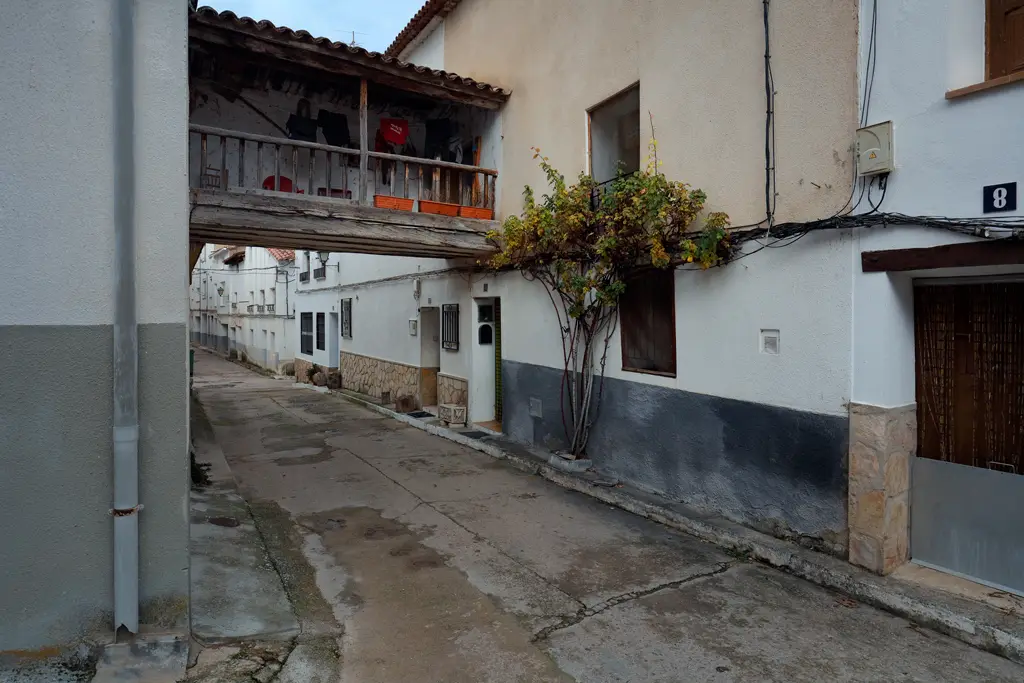
During a walk through the town, numerous artistic figures placed everywhere also draw attention. These statues represent the customs and trades of the past and present, adding a charming and human layer to the historical stones. However, the critical visitor cannot ignore the other side of the coin. Despite its great potential and its claim to be a tourist attraction, Cañete exudes an impression of abandonment and neglect in many spots. Many historical buildings are in a poor state of conservation, indicating a lack of appreciation and resources to preserve this valuable heritage for the future. Respect for historical integrity sometimes seems to be absent, especially due to the visual pollution of electrical and communication cables that crisscross the facades of historical buildings and streets in a disorderly fashion.
Aesthetic Chaos in Public Space
What further disturbs the aesthetic experience are the random elements placed throughout the public space. There seems to be no unified vision for street decoration, resulting in a confusing and chaotic impression of styles and objects installed without much taste. This contrast between the inherent beauty of the architecture and the neglected modern additions is, at times, painfully visible. As if the visual neglect were not enough, the local council decided to add a layer of noise pollution, breaking the peace of the environment with loudspeakers emitting endless loops of children’s songs throughout the day.
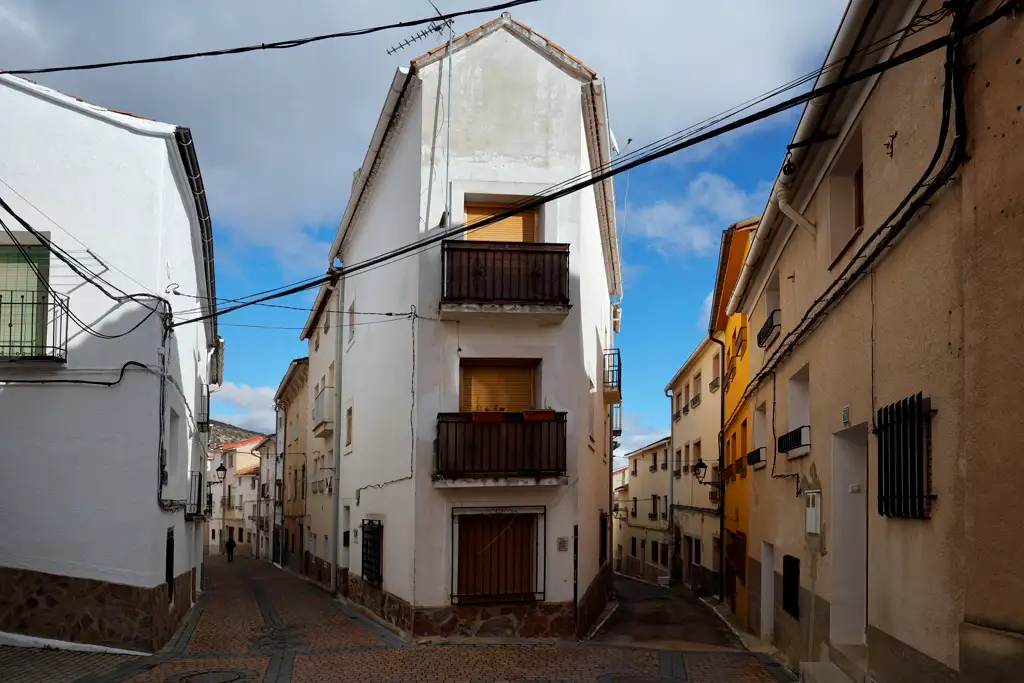
All kinds of cables that obscure the view
The Sad Paraje de El Postigo
The town’s main natural attraction, the Paraje de El Postigo, is unfortunately the low point in terms of maintenance. The wooden railings along the steep and slippery paths are broken in many places, which can lead to dangerous situations for hikers in bad weather. One of the bridges is closed to the public, and signs hang warning of the danger of falling rocks. Maintenance of the green areas is also lacking. The general impression of this site is, therefore, one of poverty and abandonment.
A Destination for Resilient Spirits
Despite these criticisms, Cañete remains a town that deserves a visit for those who can see beyond its deficiencies. It is a place of extremes where the splendor of the Middle Ages fights against the indifference of modernity. The atmosphere of a deserted walled town in the cold Spanish mountains possesses its own melancholic charm that is hard to find elsewhere. It is to be hoped that in the near future, more will be invested in the conservation of historical buildings and safety.
A Hidden Gem Waiting to Be Rescued
For now, Cañete remains a hidden gem that shines primarily through its natural location and indestructible history, but it needs a careful hand to bring its former glory back to life. For the adventurous photographer or the traveler with a predilection for unpolished Spain, Cañete offers, in any case, food for thought and beautiful, if sometimes somber, images.
More information
Official website (Spanish): Villa de Cañete