The Metamorphosis of El Sabinar
Discover the winter enchantment of the Moratalla highlands. In this story, we take you to the northwest of Murcia (Spain), which was completely transformed by a snowfall. A visual and narrative journey across the white paths of El Sabinar, shortly after the passage of Storm Ingrid (24/01/26).
Meteorology sometimes gifts us chapters that seem to come straight out of a magical realism novel. What was experienced last weekend in the municipality of Moratalla is living proof of that. The days leading up to the storm already signaled that Storm ‘Ingrid’ would be no ordinary disturbance. It proved to be a phenomenon capable of restoring that much-desired image of a rugged high-mountain range to the Murcia region.
The snow-covered Sabinar in the morning
Saturday Early Morning: The World Freezes
The first warning was the sudden drop in temperature. It is Saturday, very early in the morning, when around three o’clock the rain quietly transitions into thick, heavy snowflakes. The rain-soaked ground rapidly transforms into a treacherous layer of ice, making the first steps outside at sunrise a perilous undertaking.
A White Sheet of Sometimes Twenty Centimeters
The snow that fell that night was no timid precipitation that melted upon touching the earth. It was a determined, dense, and constant snowfall that steadily accumulated on the rooftops of the houses and the vast fields surrounding the village. By the time the sun rose, the spectacle was complete: a virgin white sheet, twenty centimeters thick in some places, covered many corners of this district. For me, it was the signal to put on my hiking boots for a long trek through this hushed landscape.
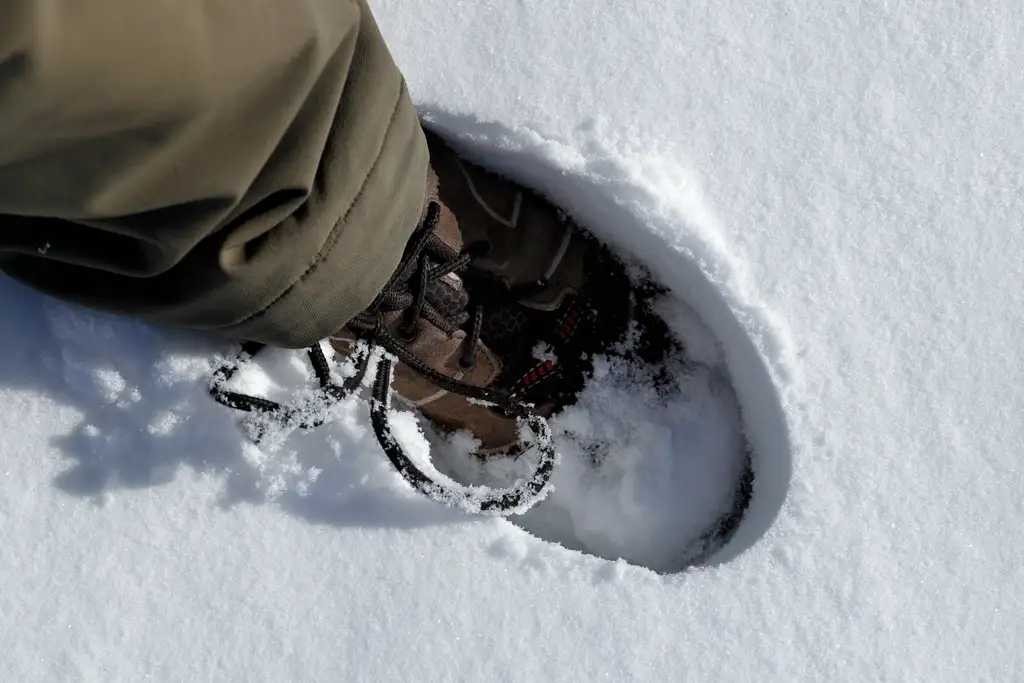
There was a considerable accumulation of snow on the road
The Start of the Route
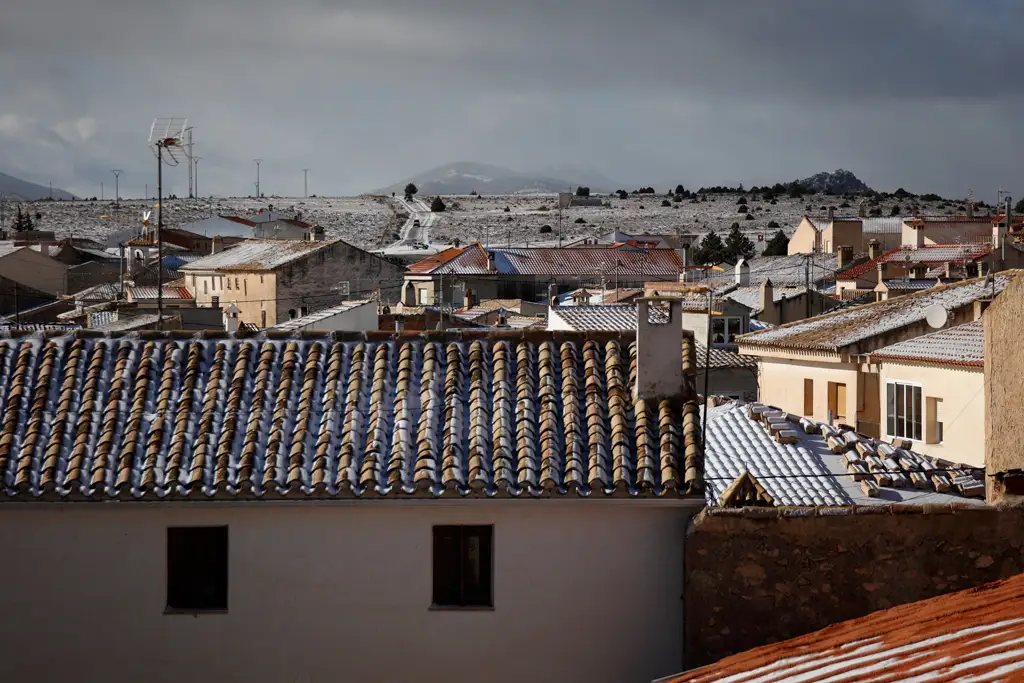
My journey begins in the village center of El Sabinar itself. It is an iconic image: smoke from the chimneys rises vertically into the icy air, tracing gray trails against the stark white background. The normally bright blue sky is filled with characterful clouds, through which a watery sun occasionally pierces to illuminate the landscape.
Leaving the house around eight in the morning requires caution. The ground consists of a substantial layer of ice topped with a fresh layer of powder snow—extremely slippery. I walk warily toward the edge of the village. As soon as I reach the unpaved hiking trail, walking becomes easier; there is no ice formation here because the rainwater soaked directly into the sandy soil.
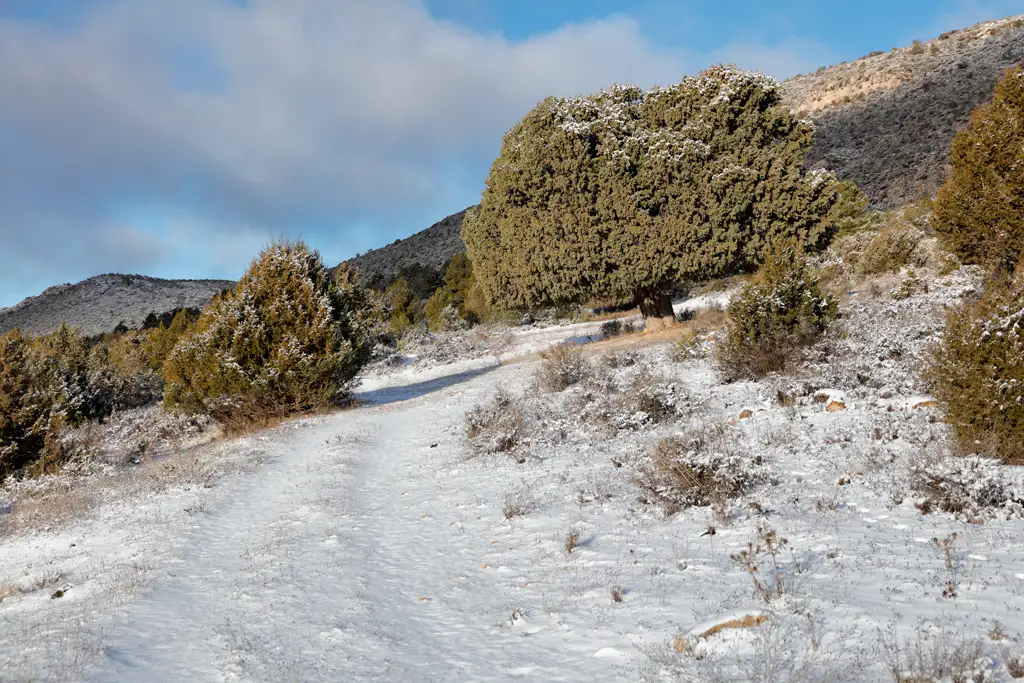
One of the hundred-year-old junipers along the route
Where Every Echo Vanishes
The absolute silence is the first sensation that strikes me as a hiker. The snow acts as natural sound insulation; every echo of daily life seems to have been absorbed. Only the rhythmic crunch of my boots in the fresh carpet breaks the stillness. It is an almost hypnotizing experience that transports me to another dimension of time.
Outside the village, it becomes truly clear how powerful the wind has been. While it seemed like an even layer at first glance, the strong wind has hunted and drifted the snow. The lower-lying paths are completely filled with spin drift, reaching depths of thirty centimeters in some spots. By necessity, I frequently leave the path to continue my way via the higher-lying fields.
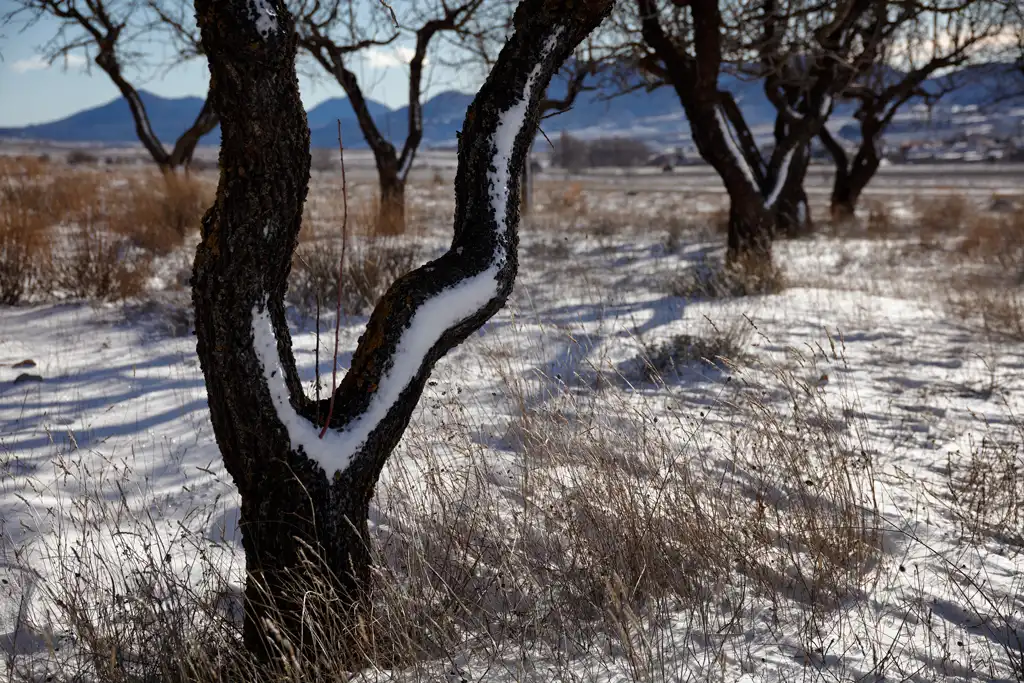
Strong gusts of wind scattered snow everywhere
A Stunning Contrast
The view is nothing short of overwhelming. The area around El Sabinar is known for its wide panoramas, but the snow adds an extra dimension. On the trunks of the almond trees, you can see exactly from which direction the wind drove the snow across the landscape. The gnarled Juniper trees, the lavender fields, and the open acres seem almost “scrubbed clean” by the fierce wind, making their shapes stand out sharply against the white.
The higher I climb, the stronger the contrast becomes between the breaking sky—intense blue in patches—and the blinding purity of the ground. The reflected light is so powerful that I have to squint my eyes regularly, an impressive reminder of the power of nature in the Murcia highlands.
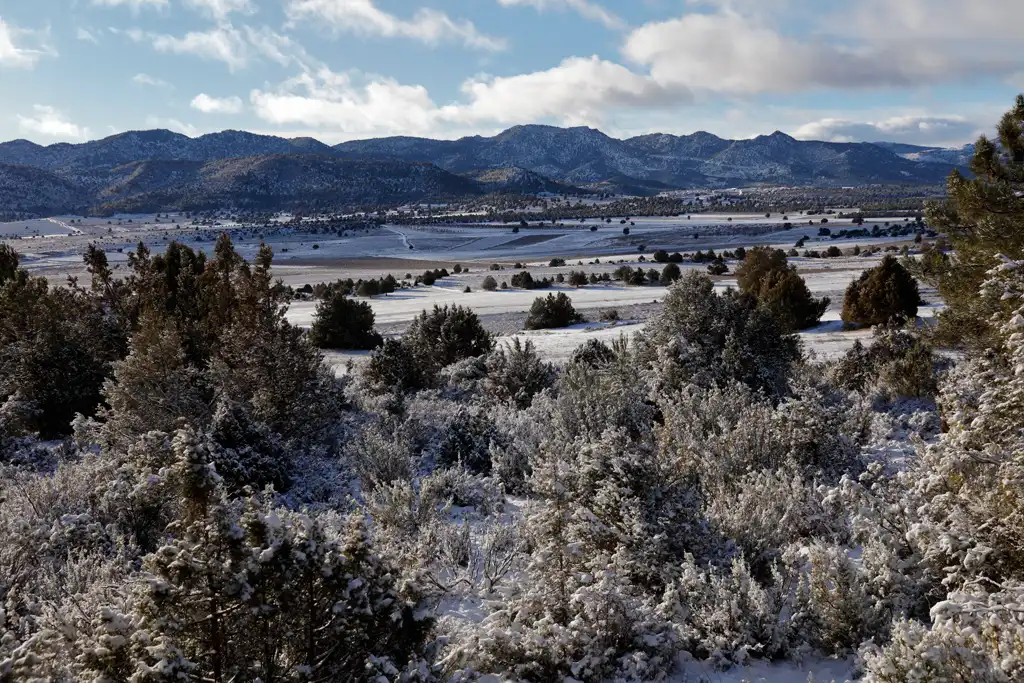
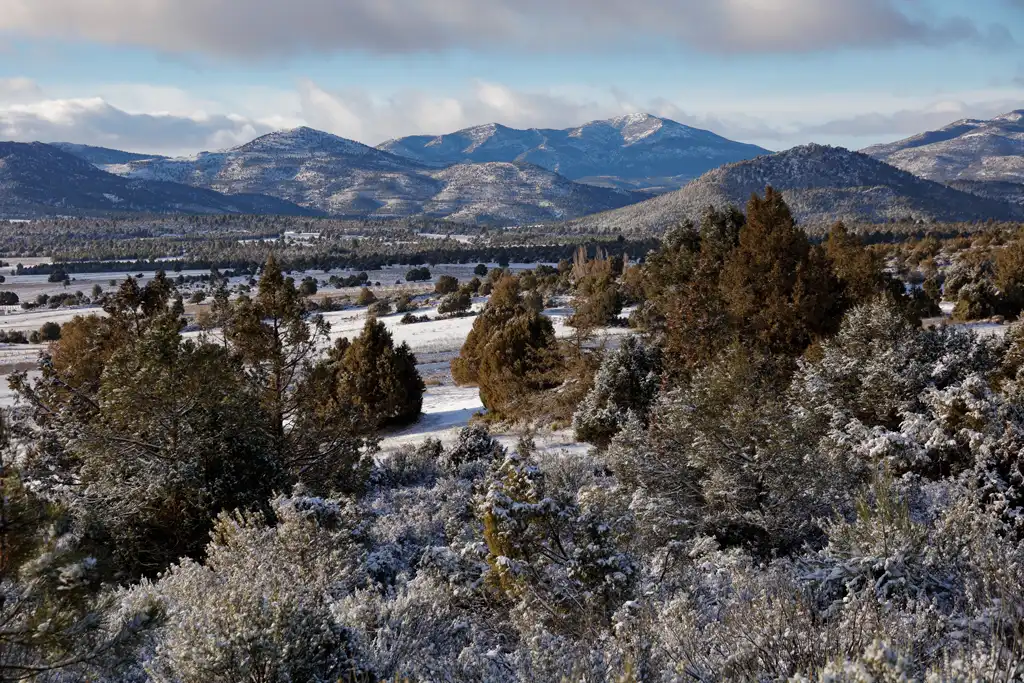
View of the Revolcadores mountain range
The Majesty of the Ancient Junipers
At the highest points of the route, the landscape reveals its greatest treasure: the Spanish Juniper (Sabina Albar), the tree from which this area derives its name. These specimens, some centuries old, rise proudly from the white. Their twisted forms and nearly evergreen color create a magnificent spectacle.
Seeing a Juniper in a snowy landscape feels like an encounter between two geological eras. Their resistance to the elements is legendary. Under the weight of Storm Ingrid, they look like ancestral guardians watching our passage with stony indifference. The rough, weathered bark contrasts sharply with the softness of the ice accumulated on the needles—a play of textures that any artist would enjoy.
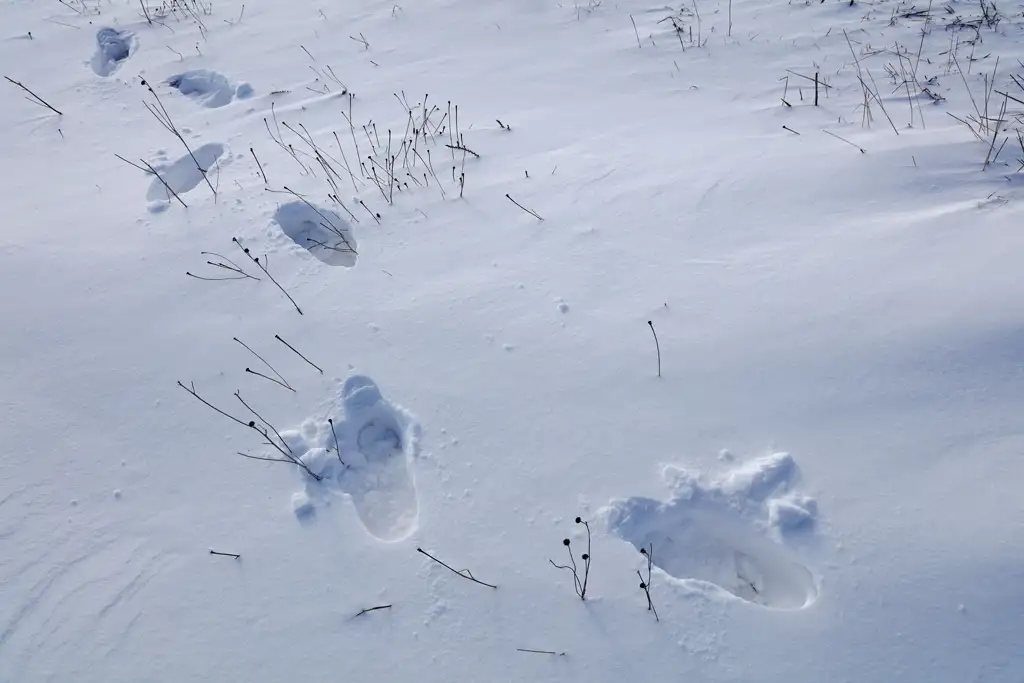
Advancing step by step over a thick carpet of snow
Panoramic Rewards
The path becomes more demanding as the elevation increases, but the effort is richly rewarded. In the distance, the Revolcadores massif looms, shrouded in a winter decor. The snow here is dry and fleeting; gusts of wind create small, dancing snowstorms low over the ground. At this point, it is perfectly clear why Moratalla is such a beloved hiking destination. The visual spectacle of the mountains and the snow-covered villages is truly breathtaking.
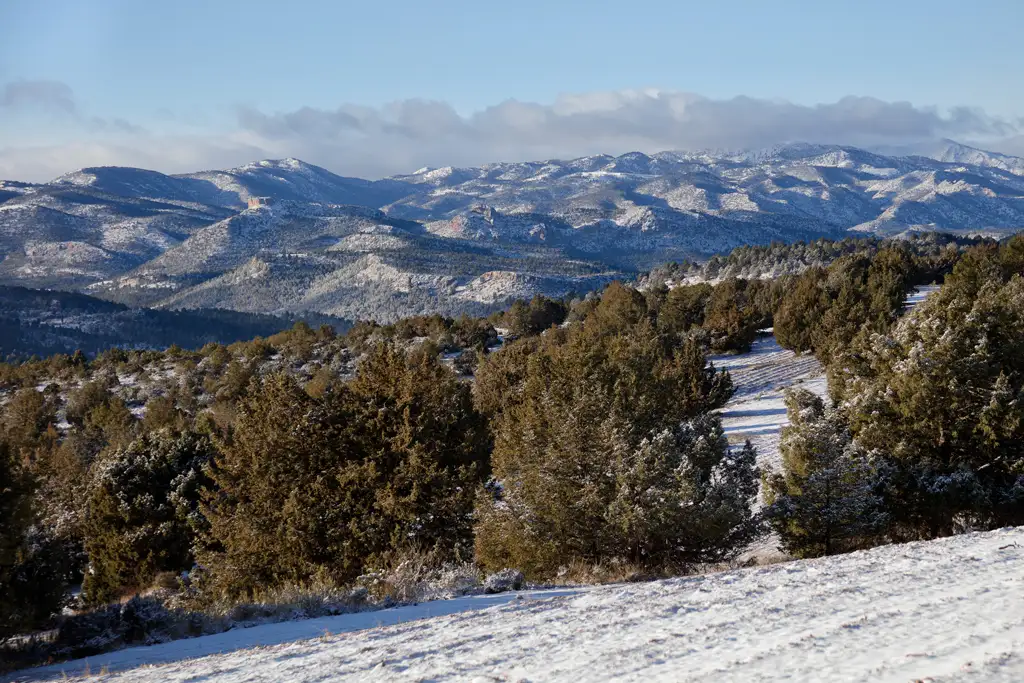
View of the Revolcadores massif, near the end of the route
A Chronicle of the Wild
One of the most fascinating aspects of this walk is discovering the local fauna through their tracks. On the thick layer of snow, the wildlife writes its own daily chronicle. I cross fresh tracks of wild boars that have descended to the valleys in search of food, and see the erratic leaps of hares that seem to have played right in the middle of the path. The snow serves as a detailed map of their movements.
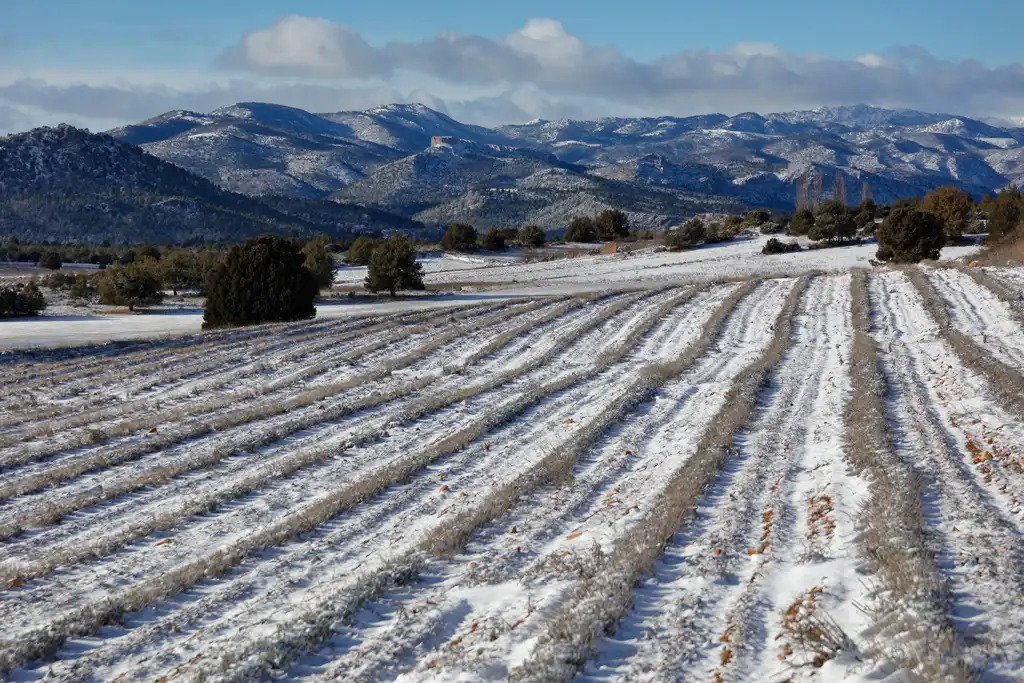
A field of lavender covered by a layer of snow
Even in this icy cold, life does not stand still; it only slows down. The sound of a bird flapping its wings to shake off the snow or the cracking of the snow under my own weight are the only breaks in the absolute peace. The air I breathe is pure and charged with the scent of cold earth and resin. It is a moment of introspection, a reminder that the purest beauty is often ephemeral—a temporary gift that the afternoon sun will soon reclaim.
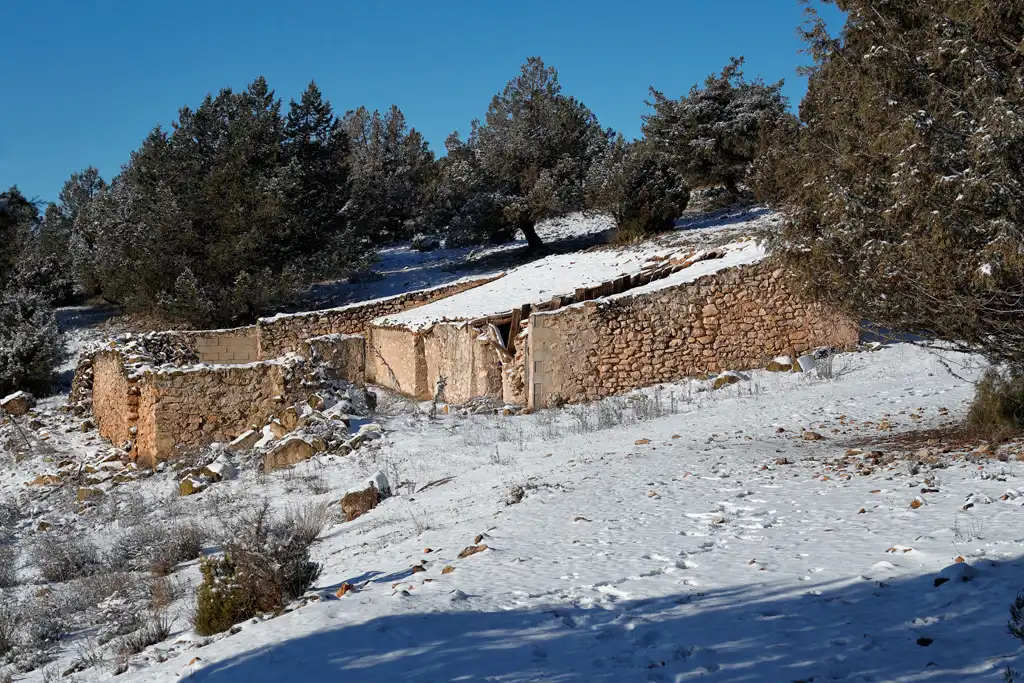
The snow-covered sheepfold, which marks the turning point of the route
The Return to Warmth
After several hours of wandering through this winter wonderland, I reach an old sheepfold, the point where the return journey to the village begins. During the descent, we pass the lavender fields, now hidden under a soft white duvet. The village reappears in sight, viewed from the heights. As the sun slowly climbs further, the shadows begin to stretch, and the white turns pink and purple here and there. The cold is intense, but the satisfaction of this trek compensates for any discomfort.
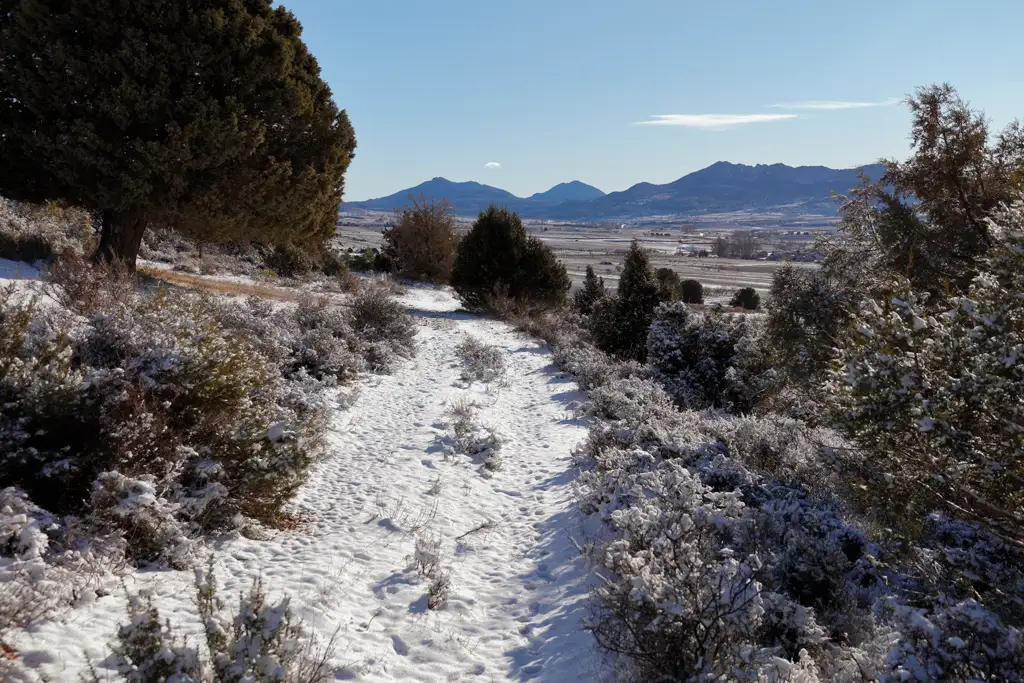
The snowy road during the descent
Walking into the village streets, the scent of burning wood stoves welcomes me like a warm blanket. El Sabinar offers not only spectacular nature but is also a gastronomic sanctuary. The thought of a steaming plate of migas or a hearty guiso (stew) is the ultimate motivation for the final meters. The hospitality of the locals, always ready with stories about the legendary snowy winters of the past, is the crowning glory of this day.
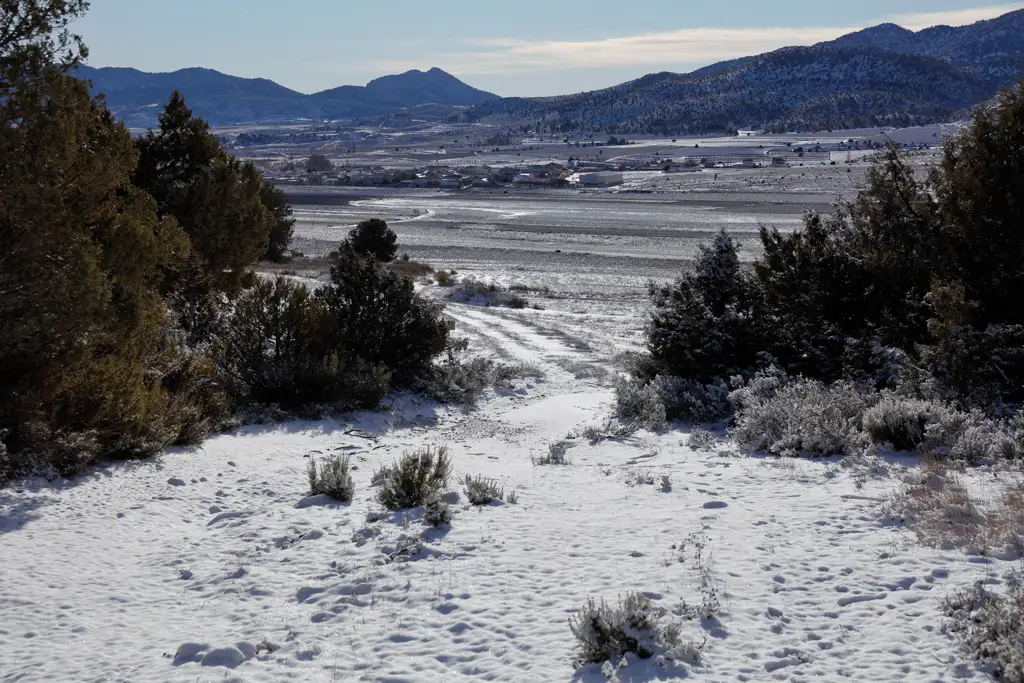
The last part of the descent with El Sabinar in the background
An Unforgettable Experience
Storm Ingrid will go down in the books as a statistic of air pressure and millimeters of precipitation. But for those who, like me, roamed the paths this weekend, she will be remembered as the breath that brought magic back to Moratalla. El Sabinar has once again proven that it needs no artifice to be one of the most beautiful places in the region. A layer of snow and the silence of the Junipers are enough to make time stand still for a moment.
More information:
The Magic of the First Snow in El Sabinar
Extreme cold front brings Storm Ingrid for the weekend
Storm Ingrid is bringing showers, snow, strong winds and intense cold