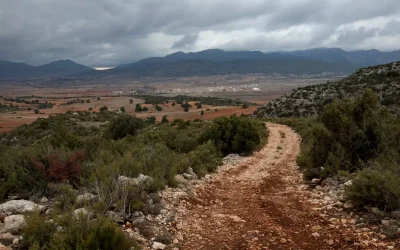
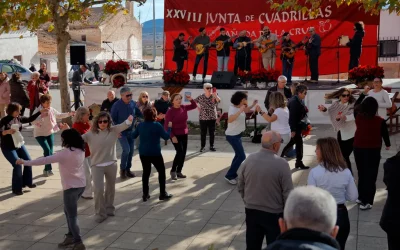
Don’t Let the Weather Stop You
When temperatures drop and the sky turns into an uninterrupted gray canvas, many photographers are inclined to store their equipment deep in the cupboard. The temptation is great to stay home by the heater, waiting for that one rare day with clear blue skies or a photogenic blanket of snow. But those who do so miss out on one of the most atmospheric seasons of the year.
Rain or shine, the world never stops offering visual stories. Precisely the days we label as ‘bad’—rainy, misty, and gray—possess a melancholic beauty that simply does not exist in the summer. In this article, we take you on a weekend trip to Cañete, a hidden gem in the Serranía de Cuenca (Spain), to discover how you can transform the gray winter into powerful images.
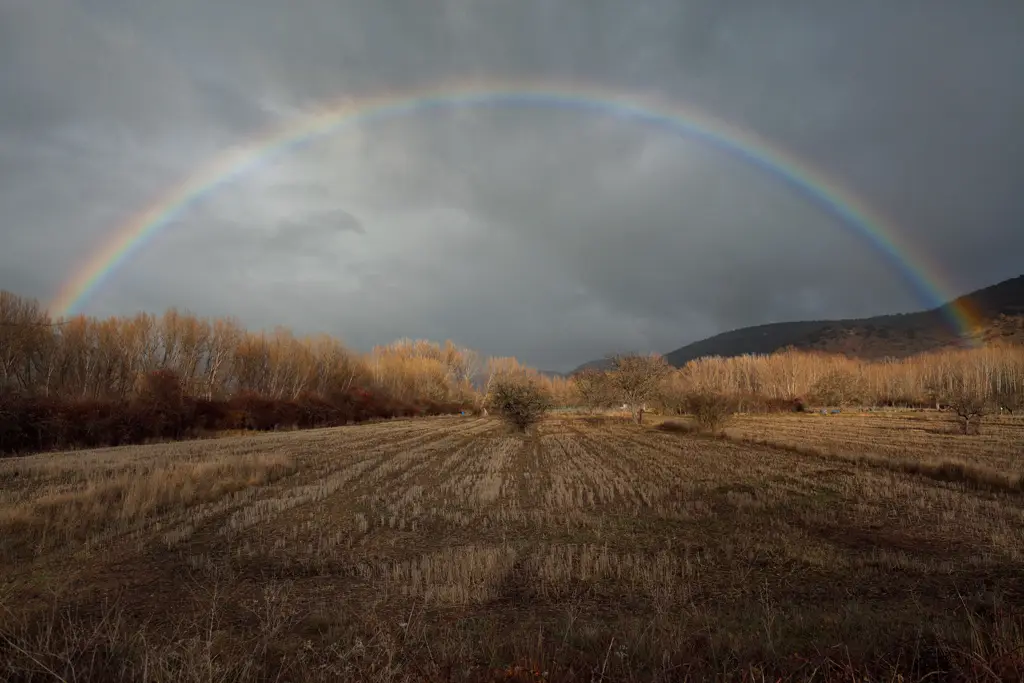
During a walk, a little sunshine gave rise to a rainbow – Cañete
Wet, Slippery, and Intense
It is winter in Spain. Everything feels cold and clammy. The rain sometimes seems like an endless repetition of falling and rising as mist. The landscape is saturated; paths have turned into muddy tracks and the limestone rocks have become slippery. Photographing in these conditions requires not only creativity but also caution and perseverance.
Yet, this is exactly the environment in which nature shows its rawest face. Often, photography only happens when snow covers everything and the world turns into a fairy tale. But snow is a mask. The gray, somber days we are talking about here reveal the true winter landscape. Without the distraction of the sun and harsh shadows, the dull colors gain an unexpected intensity.
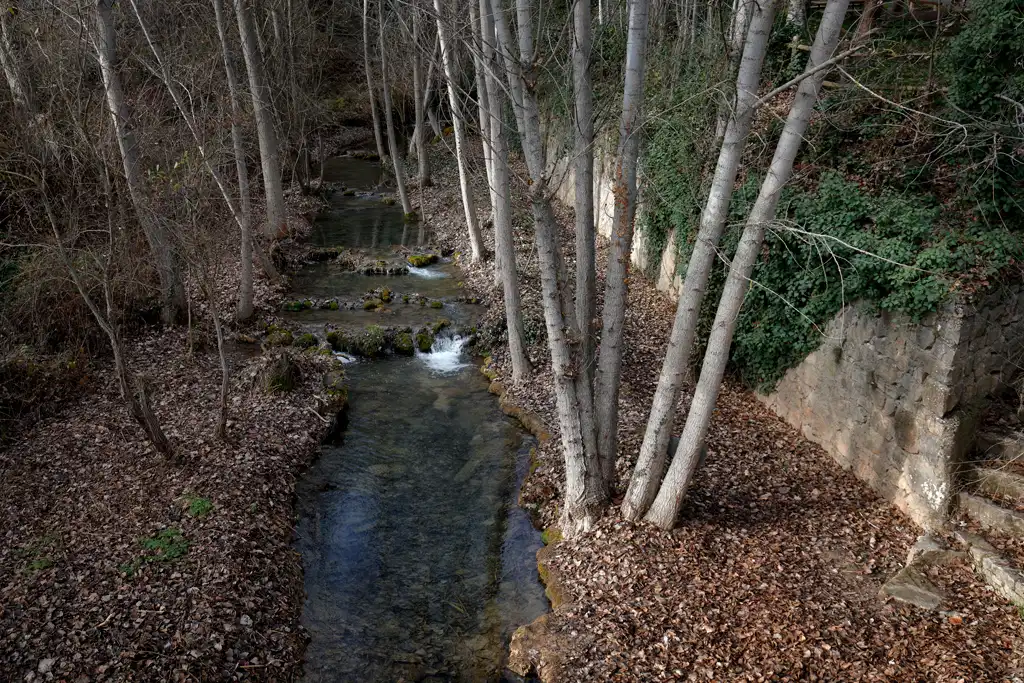
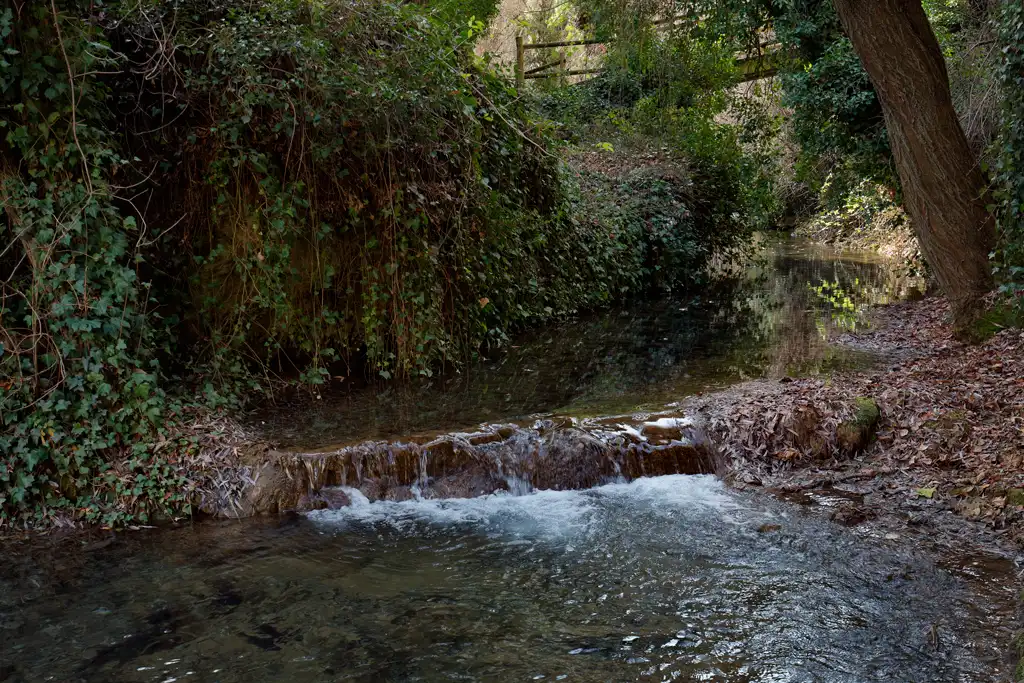
Small streams are always good subjects for photography
The Power of Diffuse Light and Color Contrast
One of the greatest advantages of a thick cloud cover is that it acts as a giant softbox. The light is soft, even, and eliminates the harsh contrasts that, in full sun, often eat away at details in the shadows or highlights. Under these conditions, colors become ‘more honest’ and deeper.
Color contrast is an essential tool for adding interest to your winter photos. Think of a lonely hiker with a brightly colored jacket in an otherwise brown and gray forest, or the deep green mosses on the wet rocks along a waterfall. By specifically looking for these small color accents in an otherwise monochrome world, you pull the viewer directly into your image. The saturation of natural colors after a rain shower is unprecedented; the brown of dead leaves becomes deep oker, and the gray of the rocks sometimes takes on blue or purple nuances.
Structure, Form, and the Black-and-White Mindset
When color is truly lacking, you as a photographer must learn to look differently. Instead of relying on color tones, you go looking for structure and light-shadow contrasts. This is the moment to ‘think in black and white.’
Winter is the season of texture. The rough bark of a tree, the pattern of raindrops on a still water surface, or the geometry of the medieval walls in Cañete. Without the distraction of color, shapes become more graphic and stories more powerful. Pay attention to the lines in the landscape: how a river winds through a ravine or how the mist emphasizes the layering of the mountains. Precisely on gray days, you can take photos that have a timeless, almost graphic quality.
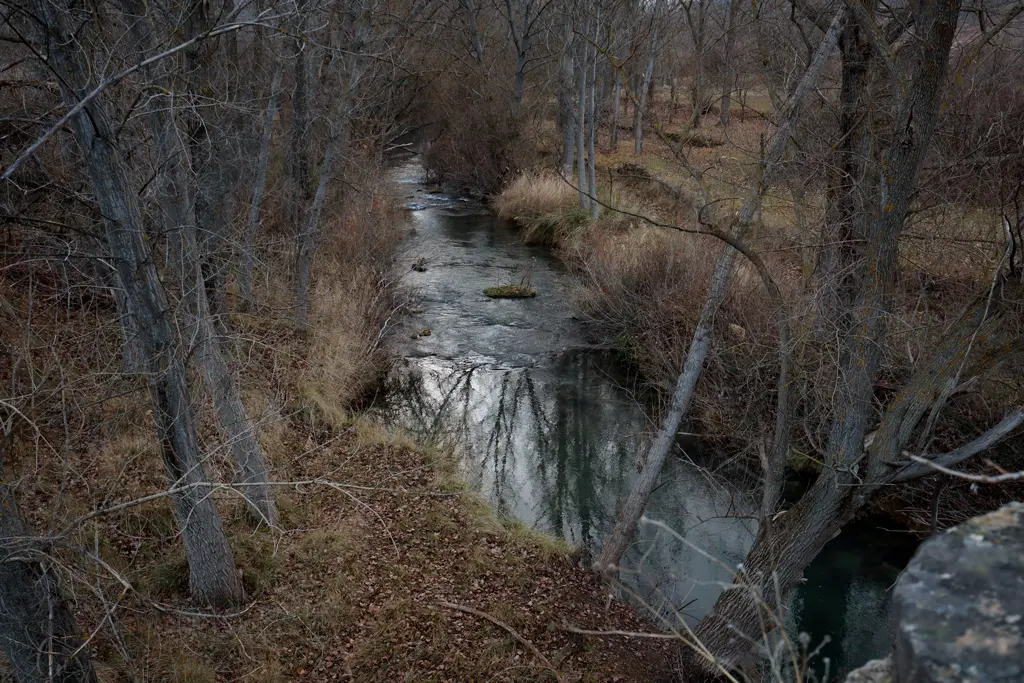
A layer of gray clouds makes for a winter photo with little color
Cañete in the Serranía de Cuenca
The photos illustrating this philosophy were taken in Cañete. This picturesque village is tucked away in the Serranía de Cuenca, just a 40-minute drive from the city of Cuenca. It is a place where time seems to have stood still, and that effect is only amplified by the limited sunlight.
Sometimes the most special places are not the best known. That absolutely applies to Cañete. The village seems to come straight out of a medieval fairy tale. Surrounded by an impressive natural environment, this small municipality offers a mountain landscape full of ravines and steep cliffs. The castle that dominates the horizon acts as an unyielding guardian over the village. In a future article, we will go deeper into the specific sights and the rich history of the village itself.
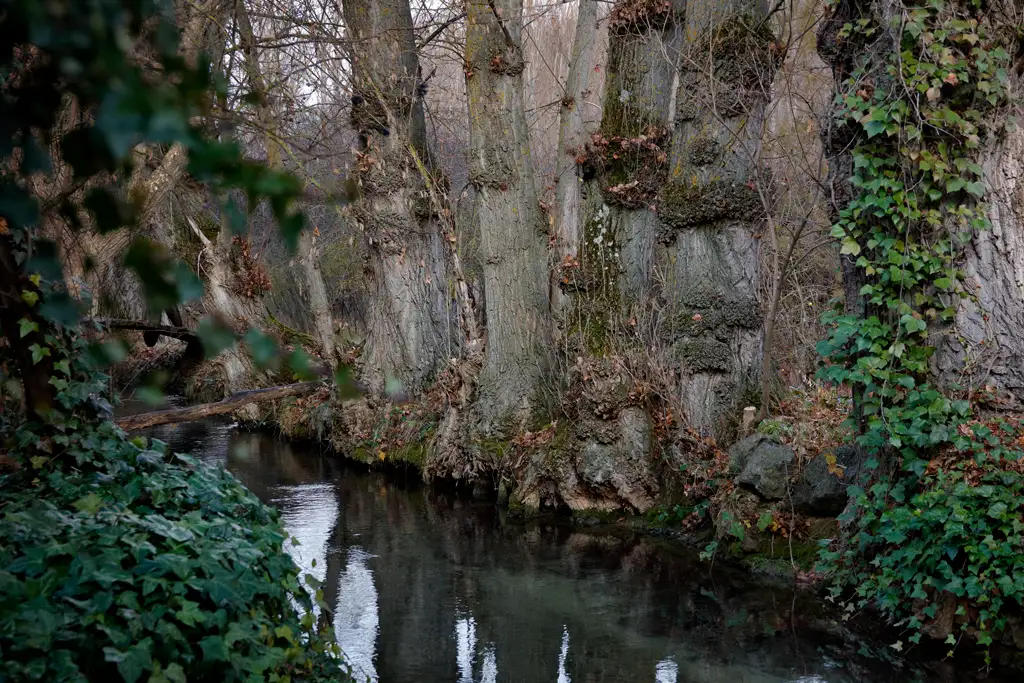
A row of trees along a small river
Tell the Winter Story
Good photography is not about capturing a ‘perfect’ world, but about telling an honest story. Winter in this part of Spain is cold, wet, and sometimes lonely. That is the story you want to tell.
A passionate photographer does not see rain as a hindrance, but as an opportunity to create images that others do not have. While most people stay inside, you capture the environment in a way that is both raw and poetic. In an environment like Cañete, where history is carved into every stone, that atmosphere is almost tangible.
So grab your camera, put on your waterproof clothing, and go outside. The gray winter waits for no one, and the most beautiful stories are often hidden in the grimmest days.
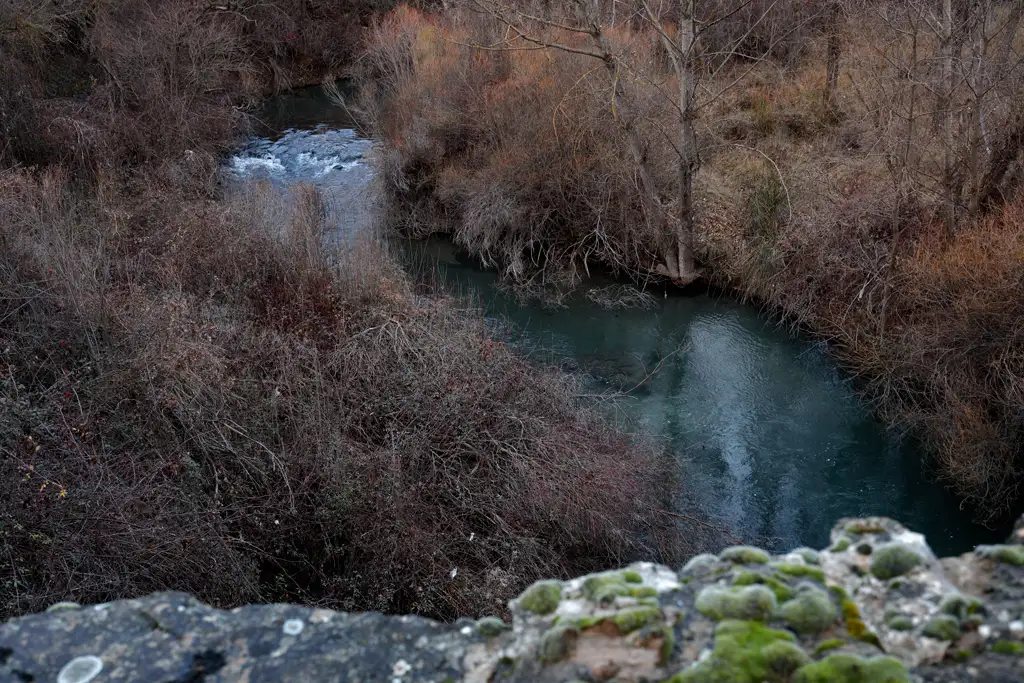
Rio Mayor del Molinillo from a bridge
Practical Tips for Gray Winter Days:
- Protect your equipment: A simple plastic cover can work wonders against the rain. Don’t forget microfiber cloths to keep your lens dry.
- Watch your white balance: On gray days, automatic white balance can sometimes make your photos too blue (cool). Experiment with the ‘Cloudy’ setting for warmer tones or shoot in RAW.
- Exposure compensation: With a uniform gray sky, your camera can often make the photo too dark (underexposed). Often turn your exposure compensation up slightly (+0.3 or +0.7) to keep the gray looking fresh.
- Look for depth: Use the mist. Objects that are further away become lighter and have less contrast, which gives a wonderful sense of depth.
- Focus on details: If the landscape is too overwhelming or ‘cluttered’ due to the grim weather, zoom in on details. A wet autumn leaf on a gray rock can be more powerful than an entire forest.
Go outside and discover it for yourself: winter is not the end of the photography season; it is precisely the beginning of a whole new way of looking.
Ready to conquer Spanish winter?
Put on your hiking boots and don’t forget your camera, because the perfect photo awaits you, even (or especially) if the sun decides not to show itself. If you would like to know more about the photo opportunities in Spain, please do not hesitate to contact me.