The Unknown Splendor of the Murcian Interior
The Region of Murcia dwells in the collective imagination of most travelers and residents as a synonym for burning sun, endless beaches, and an arid, almost desert-like interior. It is an image that partly fits reality; however, those who look beyond the coastline and the market gardens discover a territory that, in terms of ruggedness and atmospheric variety, has nothing to envy of the more famous regions of northern Spain. In the far northeast, where the borders of Murcia, Albacete, and Granada nearly touch, lies a high-altitude plateau that undergoes a complete metamorphosis during the winter months. Here, beneath the shadow of the mountains of Moratalla and Nerpio, the dry heat is traded for a biting cold and, with a bit of luck, the transformation brought by a white blanket of snow.
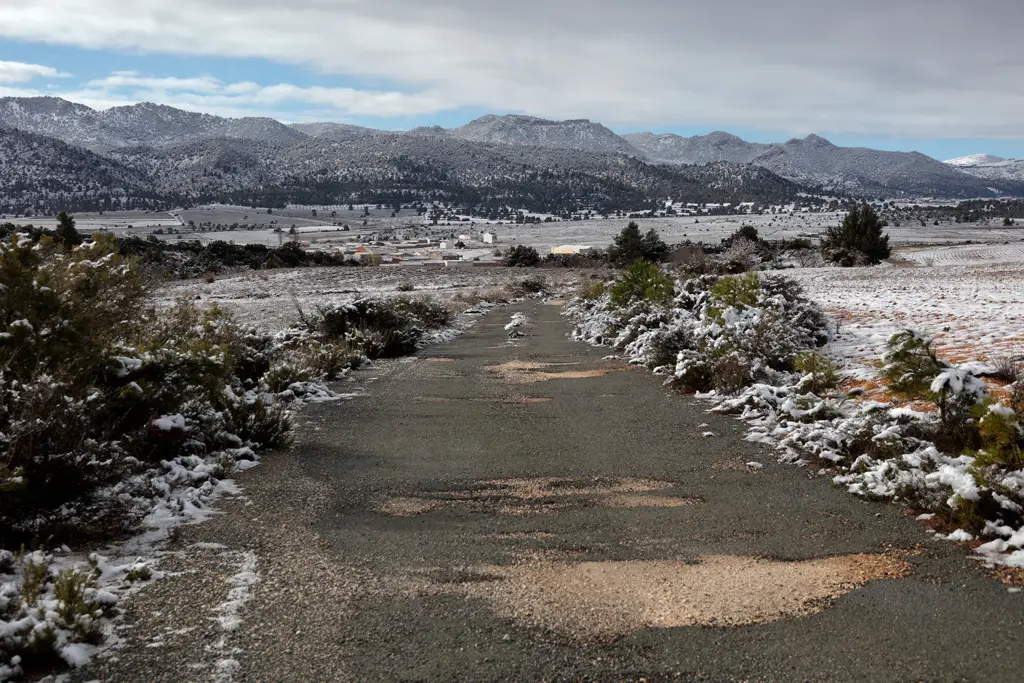
The first section of the route runs uphill along an asphalt road, offering a privileged view of the village of El Sabinar in the background
The Expectation of Snow in the Northeast
It all began on Friday (March 6th) evening, around eight o’clock. While the rest of the region prepared for a typical weekend, the residents of El Sabinar and surrounding hamlets watched the sky intently. The Spanish meteorological service, AEMET, had issued a warning that always generates a healthy sense of anticipation in these southern latitudes. A yellow alert was active, with a forecast of at least five centimeters of snow in the Nerpio and Moratalla areas. To the casual passerby, five centimeters might seem like little, but in a landscape dominated by sabinas (juniper trees) and limestone rocks, every flake is a blessing for both the eye and the camera.
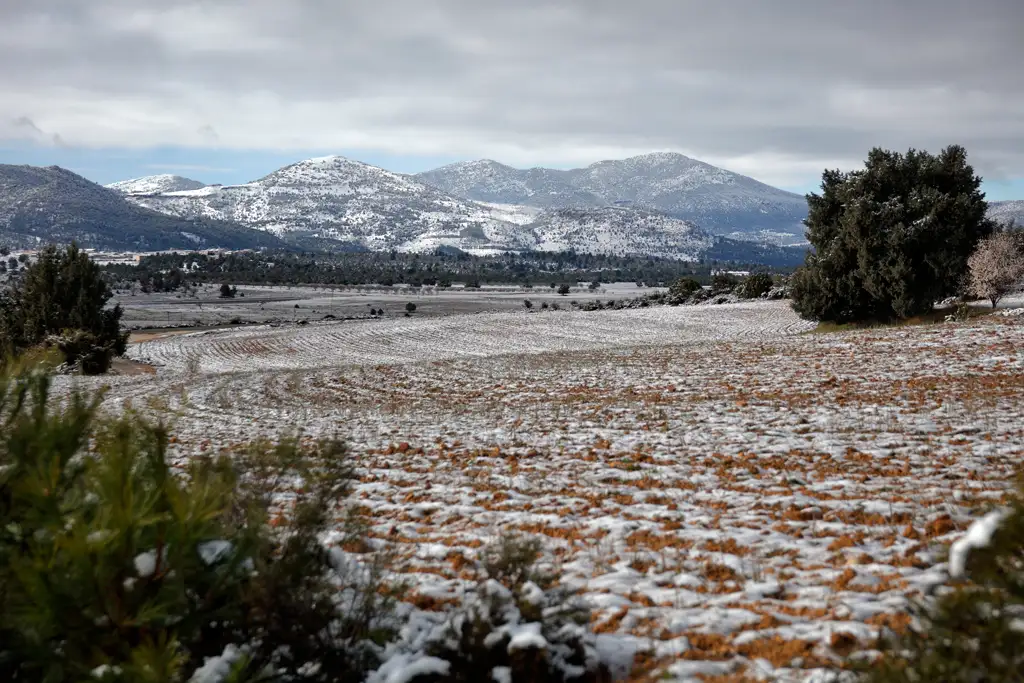
Along the route: snowy fields with the Revolcadores massif in the distance
The big question that night wasn’t whether it would snow, but whether that beauty would last. Meteorological maps indicated that a band of rain would arrive after midnight, while temperatures would remain dangerously close to—or even above—the freezing point. For a landscape photographer, this is the ultimate dilemma: knowing that the beauty brought by the night could be erased by the rain of the morning. It was a night of restless sleep, hoping that the layer of cold air would be thick enough to stall the rain or that the precipitation would pass faster than predicted.
The Aesthetic of the “Bad Weather” Photographer
Early Saturday morning, before the sun had the slightest chance to break through the cloud cover, the moment of truth arrived. Drawing back the curtains, the world around El Sabinar appeared wrapped in a soft white cloak. Although the rain had already taken a toll on the snow layer, most of it remained. For many, this is the moment to turn up the heating, but for the “hunter of moments,” the work has only just begun. I packed my camera into its backpack, harnessed my dog, and laced up my snow boots. Well-bundled, we stepped out of the house to meet the gelid air.
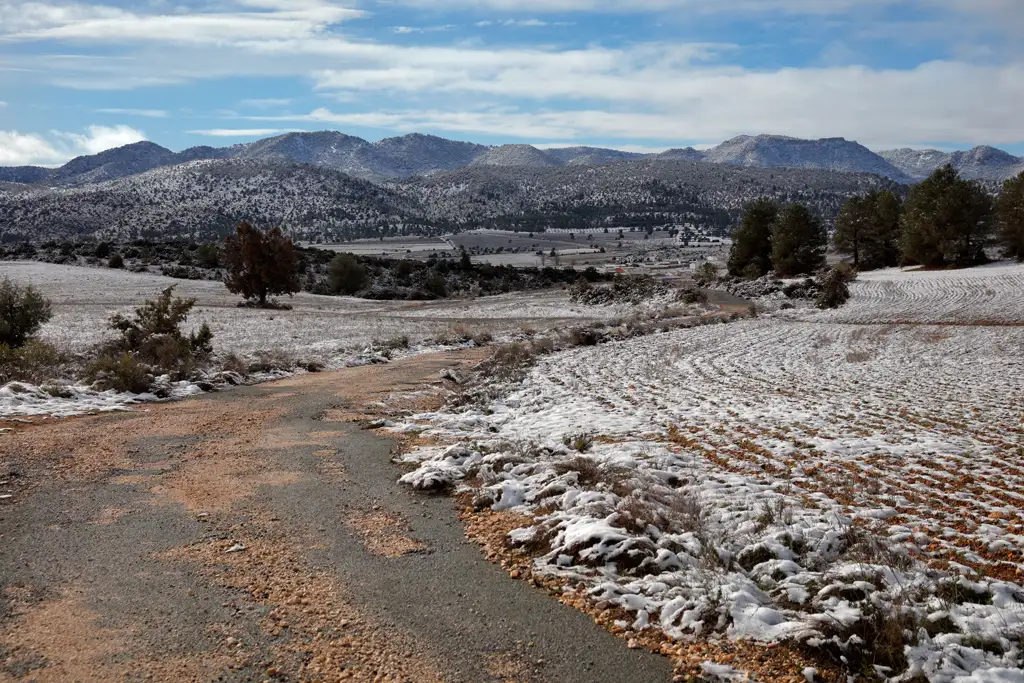
The asphalt road, visibly destroyed by the 2024 DANA storm
I often consider myself a “bad weather” photographer. In a region like Murcia, known for its three hundred days of sunshine a year, this sounds almost like a curse. For tourists, an intense blue sky is a blessing, but for landscape photography, it is often an obstacle. For months, the sky over the mountains can remain cloudless, resulting in harsh light and a lack of depth.
The Light of the South
In Northern Europe, clouds act as a natural filter that softens sunlight and casts playful shadows across the land. Here in the south, we must wait for the storm, the cloudiness, and the precipitation to capture that same drama in our images. For me, “bad weather” is the only way to strip the landscape down to its soul. The additional drawback at this latitude is that the “golden hour” and “blue hour” are extremely short. Before you know it, the sun is either too high or has already set, sometimes in a matter of half an hour.
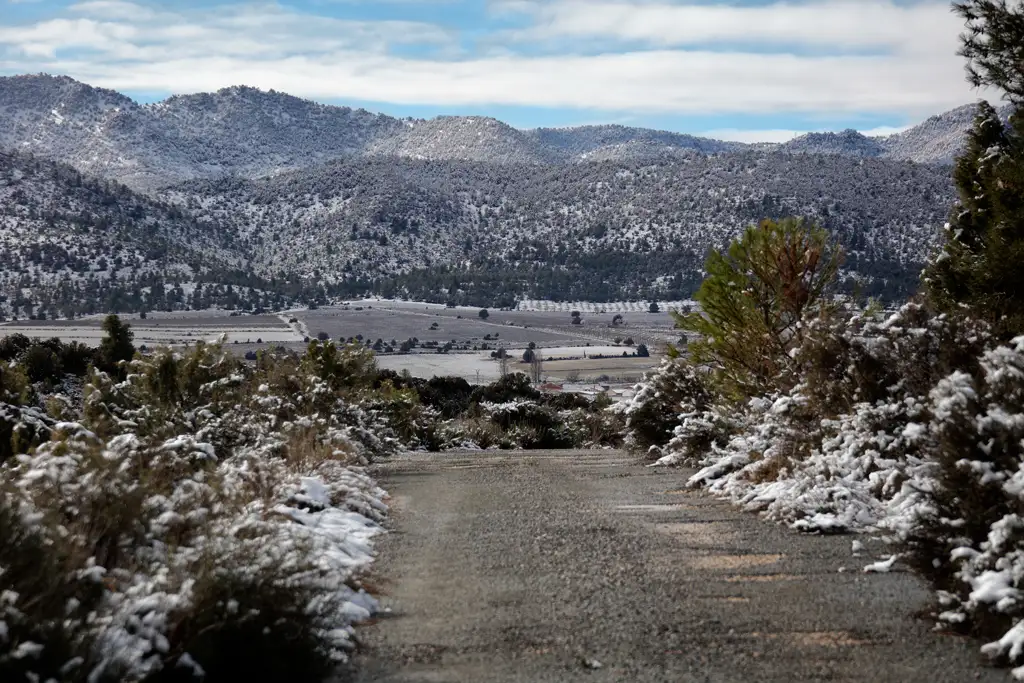
A panoramic view during the hike
A Journey Through a Changing Landscape
The moment you step into a snowy field, your perception of space and time shifts. A landscape you know perfectly, which you have walked hundreds of times under the summer heat or the mild autumn, suddenly becomes unrecognizable. The snow erases the details that normally distract the eye and reduces the scenery to its essence: form, line, and contrast.
Because temperatures were around 6°C above zero, the thaw had already begun. This created a very specific visual dynamic. The snow had already vanished in some spots, revealing deep, saturated colors in the rocks and plants peeking through. The contrast between the brilliant white and the dark, damp earth offered much more powerful images, full of textures that a thick, uniform layer of virgin snow could not provide.
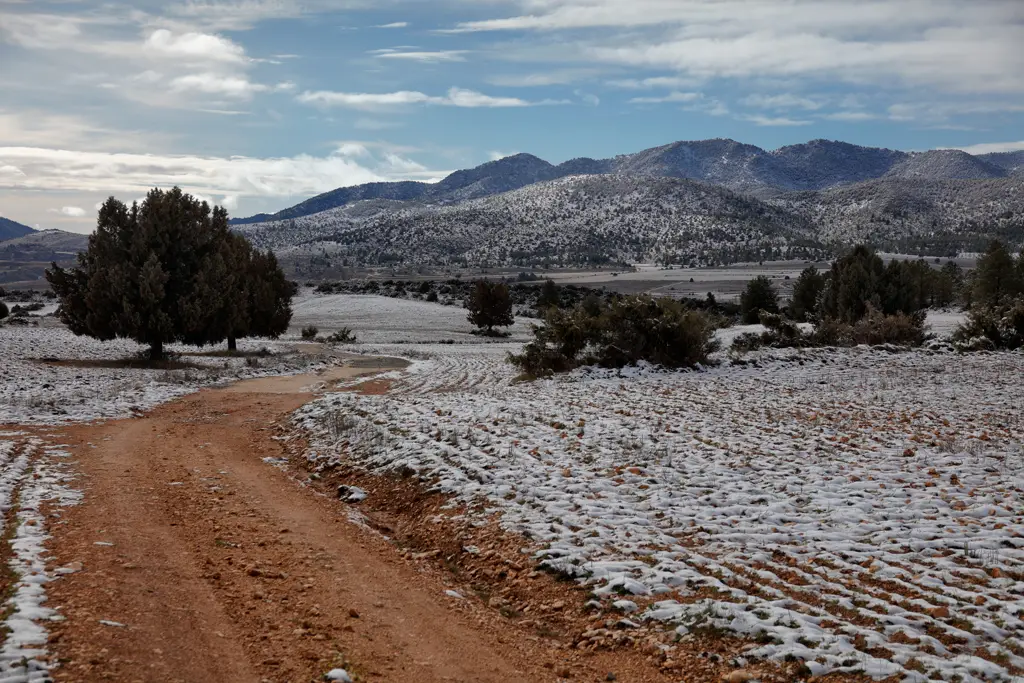
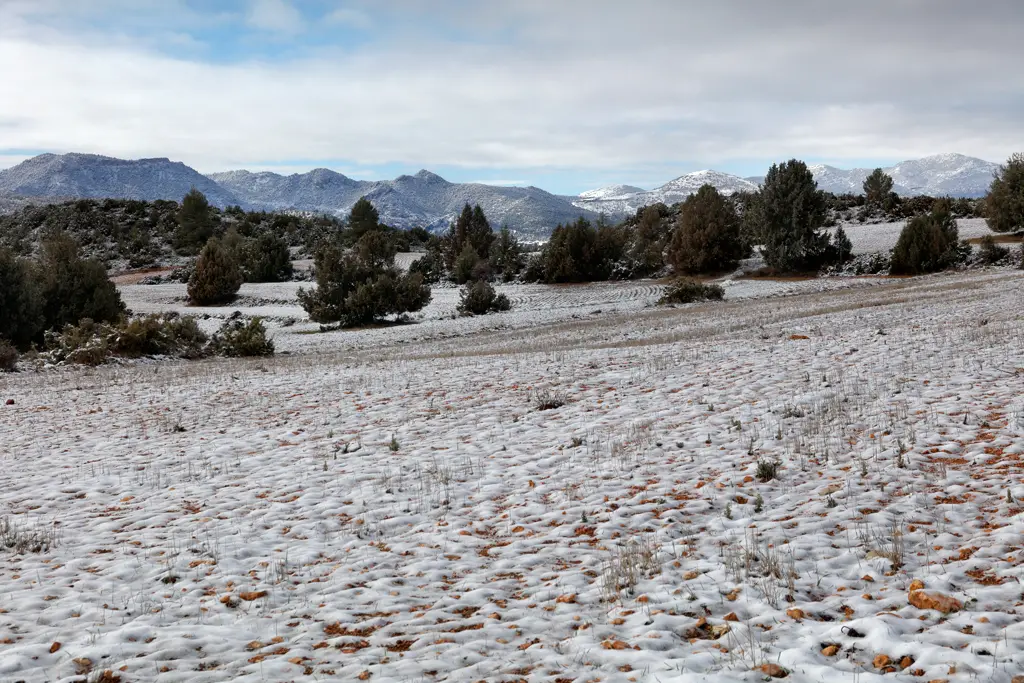
Snowy fields in El Sabinar
For two hours, we wandered through a winter landscape that, over the years, has become increasingly rare. Climate change is also leaving deep scars in the interior of Murcia. The older residents of El Sabinar still tell stories of winters when the village was cut off from the world for weeks. Today, snow has become a fleeting guest—an exception to be treasured before the sun burns away its memory. It was, therefore, a special occasion to immortalize every moment, knowing that in a few hours, the transformation would have reversed.
The Power of Contrasts and the Legacy of the DANA
Saturday morning’s route was chosen carefully. In lower areas, melting snow turns the ground into a treacherous, sticky quagmire that makes walking nearly impossible. In the higher zones, toward the peaks of the surrounding mountains, the ground is composed mainly of sand and rock. This makes the trek physically easier, though it carries another danger: the layer of snow hides stones and boulders, meaning every step carries the risk of a twisted ankle or a nasty fall. It requires constant focus—a sort of meditative attention to where you place your feet. Good footwear is, therefore, an indispensable requirement.
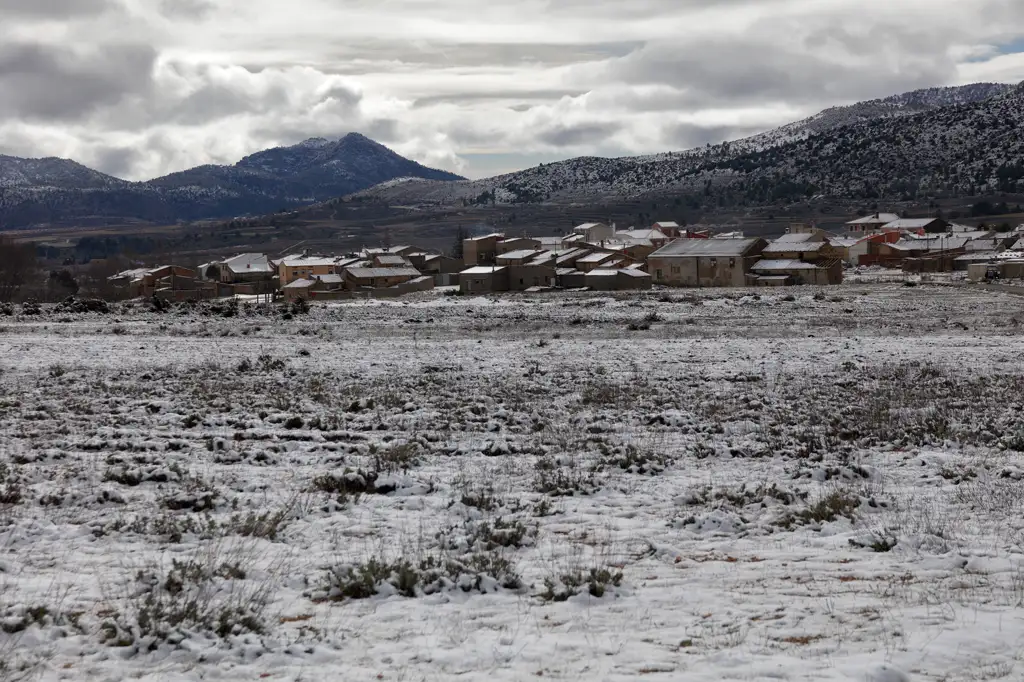
The village of El Sabinar appearing on the return path
Part of the route followed a broken asphalt road—a painful remnant of the DANA storm that struck the region in 2024. The force of the water back then was so massive that entire stretches of road were simply washed away. Now, covered here and there by a layer of snow, that destruction seemed almost serene, like modern ruins in a white stage setting. As we moved away from the village, any trace of human activity vanished. We walked alone among the vast farmlands and snowy slopes. Reaching the highest point, I left the path to photograph the valley in all its splendor. The cloud cover broke in places, allowing rays of filtered light to illuminate the snowy hillsides—a photographer’s dream.
Bajil: The Final Refuge of Winter
By midday, the snow in El Sabinar had mostly disappeared, but the hunger for more images was not yet satisfied. Along with my wife, I decided to head toward a friend’s house in a small district called Bajil. This enclave sits considerably higher than El Sabinar and is tucked away in a narrow, sheltered valley. Due to its location and altitude, Bajil often functions as a natural refrigerator; when the snow has melted everywhere else, the last remnants of winter can usually be found here. It is a magical place, far from the inhabited world, where the silence is almost tangible.
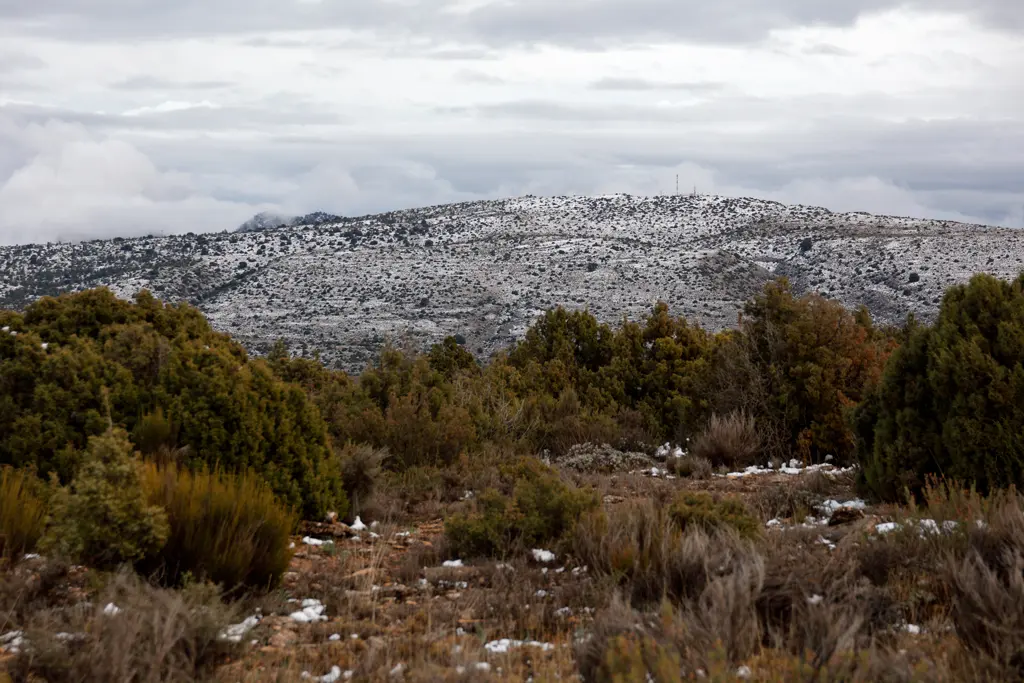
The antenna station on the mountain near La Risca, seen from Bajil
With my dog by my side, I hiked from Bajil toward La Fuensanta, one of the prominent peaks overlooking the impressive Campo de San Juan. After about half an hour of steady climbing, we finally reached the northern slopes. Here, winter was still putting up a brave fight. While the valleys below already felt like spring, the northern hills near the La Risca antennas remained completely white. The peaks of the northern range formed a sharp, white silhouette against a sky that was turning gray once more. In Bajil itself, the snow had dwindled to a few patches, but the upward hike was worth it for the views and the final winter textures.
A Look Toward the Future and the Hope of April
Although the calendar already marked March and the first signs of spring were evident in the rest of Murcia province, winter in these highlands has not officially said goodbye. It is not uncommon in this region for snow showers to fall as late as mid-April, wrapping the landscape in a white veil once more. It is a constant game of waiting and anticipation. Knowing that nature can pull a surprise out of its hat at any moment keeps the passion for photography alive.
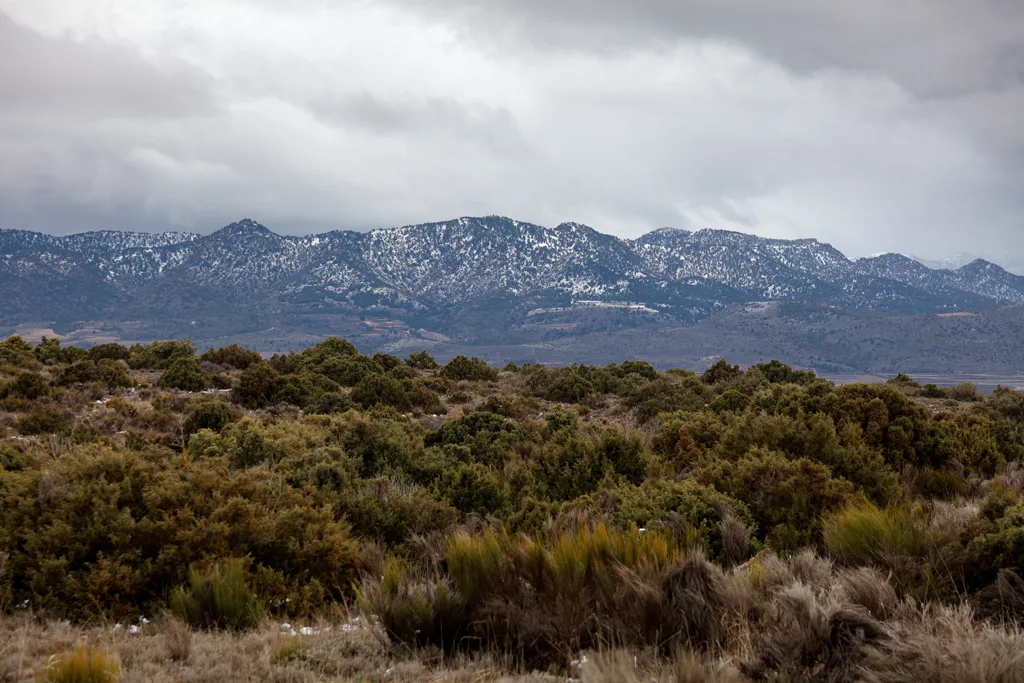
Panoramic views of the snowy mountains of Campo de San Juan from Bajil
For the next few weeks, the AEMET website will remain my most visited page. The camera will stay within reach, and the snow boots will be ready by the door. There is nothing more beautiful than the silence of a snowy morning in a region that the rest of the world forgets the moment the temperature drops below twenty degrees. Murcia is much more than sun and sea; it is a place of extremes, of dramatic skies, and of an unexpected winter beauty waiting to be discovered by anyone willing to brave the cold.
Discover the Magic of the Murcian Interior
Has this winter tale sparked your interest in the lesser-known side of Spain? The area of Moratalla, El Sabinar, and Bajil offers a unique experience for nature lovers and photographers seeking authenticity and calm. Whether for its impressive hiking trails, its rich local gastronomy, or the chance to experience the “white gold” of the south for yourself, the northeast of Murcia welcomes you with open arms. Forget the clichés and let yourself be surprised by a landscape that tells a new story every season. We invite you to walk the paths that others overlook and discover the true soul of this beautiful land. Visit our local guides and plan your next adventure in the heart of the Murcian mountains, where winter still knows how to be winter.
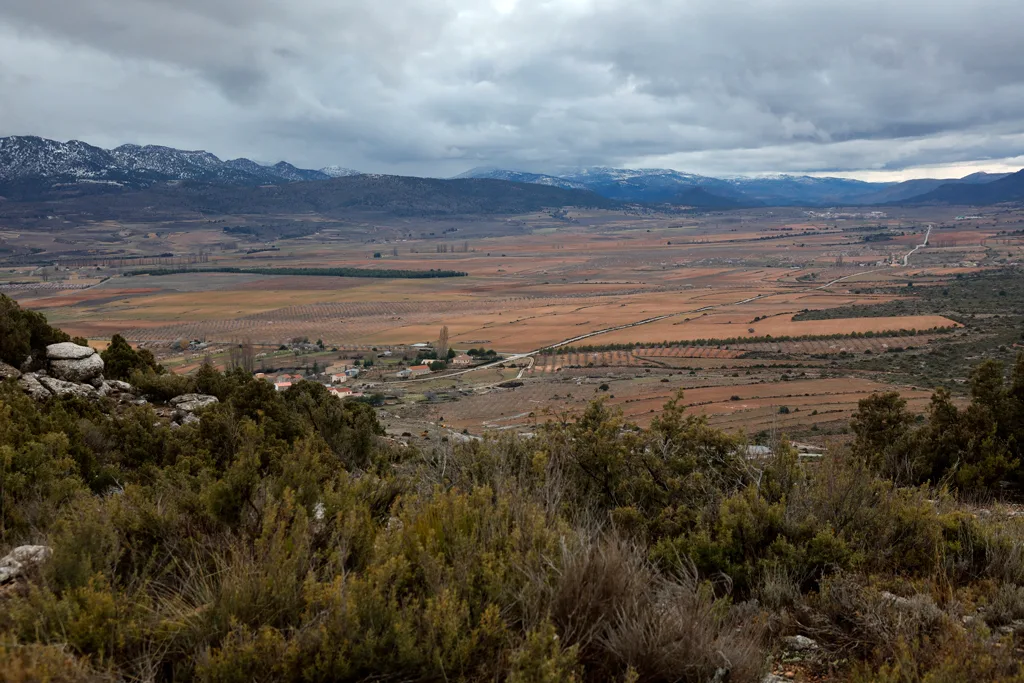
The Campo de San Juan valley and El Sabinar (in the background)
If you would like to read and see more about winter in El Sabinar, please continue to the next article: Storm Ingrid covers El Sabinar with a blanket of snow