A Search and Rescue Journey into the Heart of Panama
Boquete, nestled in the highlands of the Chiriquí province, is often celebrated by travelers for its misty coffee plantations and its climate of eternal spring. But for those of us involved in the grit of search and rescue operations, the town served as a deceptive sanctuary—a base of operations that stood on the precipice of one of the most unforgiving wilderness areas in Central America. My project was stationed here, yet my reality was far removed from the boutique cafes and flower-lined streets of the town center. I was positioned in a remote sector where the distance to the nearest indigenous village was measured not in miles, but in a grueling twelve-hour trek through vertical mud and dense undergrowth. It was a landscape that demanded respect and a level of logistical planning that only a helicopter could truly bridge.
Bocas del Toro
While Boquete provided the high-altitude vantage point, our mission frequently pulled us across the continental divide and down into the sweltering, emerald depths of Bocas del Toro. To the uninitiated, Bocas del Toro is a name synonymous with Caribbean islands, turquoise waters, and vibrant nightlife. However, the mainland of this province is a different beast entirely. It is a vast expanse of primary tropical rainforest that blankets the mountainside all the way to the coast. This is a world where the humidity feels like a physical weight against your chest and where the canopy is so thick that midday can feel like dusk on the forest floor.
The indigenous groups
The regular visits I made by helicopter to the indigenous groups in the Bocas del Toro jungle were as much about building trust and community relations as they were about the technicalities of the search and rescue project. Descending from the cool, thin air of Chiriquí into a clearing in the Bocas jungle was like traveling back through centuries. The village we visit, Alto Romero, was composed of humble huts, architectural marvels of necessity built from the very forest that surrounded them. These structures featured roofs meticulously thatched with palm fronds, Corrugated sheets, or plastic foils. From the air, these clusters of huts looked like small brown mushrooms huddled in a sea of infinite green. On the ground, they were the center of a resilient and ancient way of life.
The Ngäbe and Naso groups
The people living in these remote corners of the Bocas del Toro mainland—primarily from the Ngäbe and Naso groups—exist in a state of profound isolation that most of the modern world has forgotten how to navigate. In our digital age, we tend to view “disconnection” as a luxury or a temporary retreat, but here, the lack of road or telephone communication is a permanent, defining characteristic of existence. There are no paved arteries carrying supplies, no cell towers catching the light of the sun, and no emergency services just a phone call away. Every resource, from salt to medicine, must be carried in on foot over trails that disappear with a single heavy rain, or brought in by those of us fortunate enough to have access to aviation.
Human adaptability
Living in a tropical forest under these conditions is a testament to human adaptability. The jungle is a place of incredible bounty, but it is also a place of relentless decay. The heat and moisture ensure that nothing artificial lasts long without constant vigilance. Tools rust, clothes never truly dry, and the rhythm of life is dictated entirely by the sun and the rain. For the indigenous communities, the forest is a pharmacy, a supermarket, and a spiritual home. Yet, for an outsider, the difficulty of life here is stark. Without telecommunications, a simple injury can become a life-threatening crisis. Without roads, the transport of crops to a market becomes a multi-day ordeal of endurance.
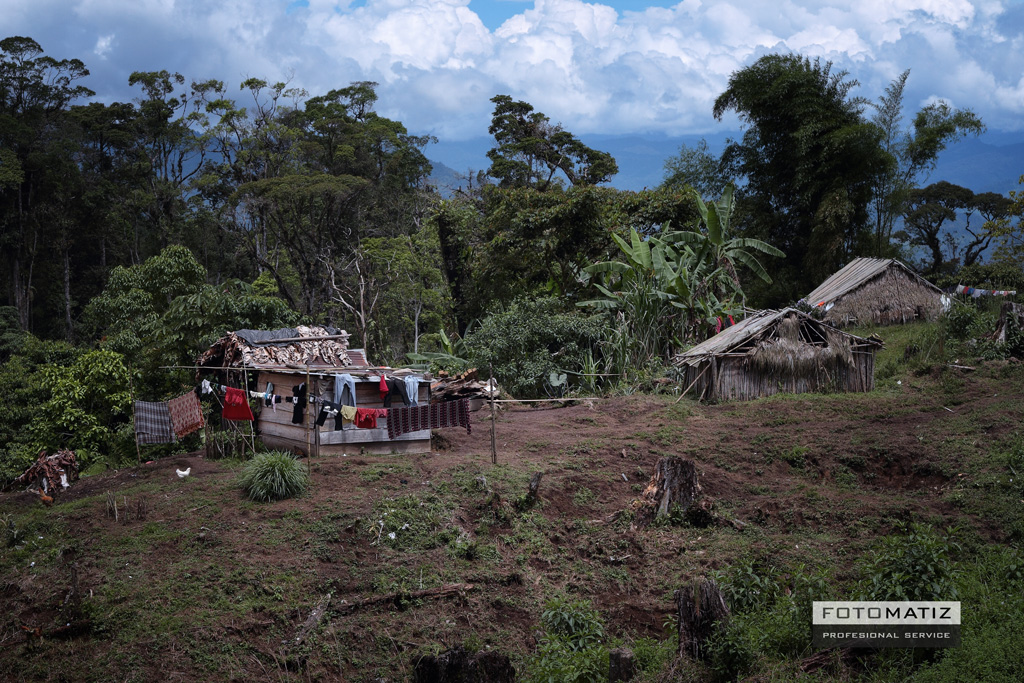
Indian shacks in the little village of Alto Romero
A needle in a haystack
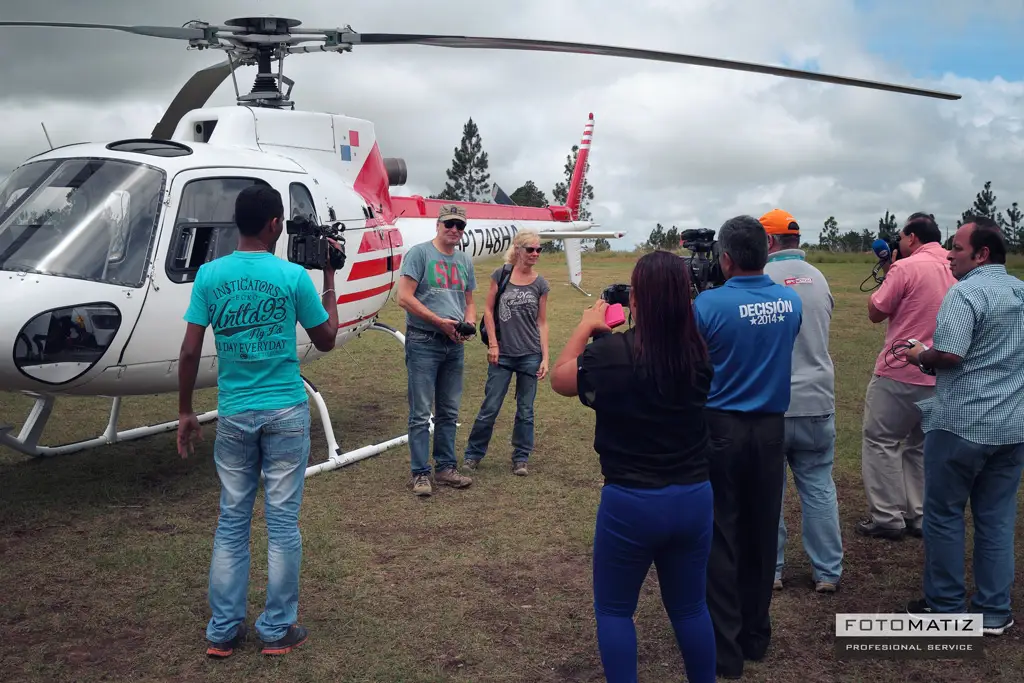
Our search and rescue project was born from this very vulnerability. In a region where the terrain is so vertical and the vegetation so dense, finding a lost individual or responding to a medical emergency is like searching for a needle in a haystack of endless green. The helicopter was our most vital tool, allowing us to bypass the twelve-hour treks and the impassable rivers. It served as a bridge between the sophisticated medical facilities of the modern world and the traditional knowledge of the jungle groups. Each time we landed in those small clearings, the roar of the rotors would be met by a quiet, dignified reception from the villagers. They were a people of few words but immense observation, navigating their world with a grace that made our high-tech gear and tactical boots seem clumsy by comparison.
A failure of Western perspective
The humility of the village huts stood in sharp contrast to the sheer power of the environment surrounding them. When you stand in the center of a Ngäbe village in the heart of Bocas del Toro, you realize that the “rudimentary” label often assigned to such places is a failure of Western perspective. Their way of life is an advanced study in sustainability and environmental integration. They have mastered the art of living without the crutches of modern infrastructure. However, the lack of basic services remains a double-edged sword. While it preserves a culture of self-reliance, it also leaves the community exposed to the whims of a changing climate and the dangers of geographical exclusion.
The duality of Panama
The experience of being stationed in Boquete while operating in the deep jungles of Bocas del Toro provided a unique look at the duality of Panama. One side of the mountain offers the comfort of civilization and the ease of modern travel; the other side offers a raw, unfiltered encounter with nature and the human spirit. The difficulty of living without roads or phones in the rainforest cannot be overstated—it is a life of constant physical labor and high stakes. Yet, there is a profound peace in the silence that follows the departure of a helicopter, a silence filled only by the sounds of the forest and the steady, rhythmic life of the group.
The faces of the people
As I reflect on those operations, the images that remain most vivid are not the technical maps or the rescue gear, but the faces of the people in those jungle huts. Their resilience in the face of such extreme isolation is a powerful reminder of what humans are capable of when stripped of the distractions of the modern world. Our project was intended to bring safety and security to the region, but in many ways, it was the people of the Bocas del Toro jungle who taught us about the true meaning of security—the security that comes from community, from deep knowledge of one’s environment, and from the strength required to thrive in a place where the only way in is by air or by a long, arduous walk through the heart of the wild.
The jungle is king
In the end, search and rescue in Panama is about more than just finding what is lost. It is about honoring the connection between the different worlds that exist within this narrow isthmus. It is about understanding that while we may live in a world of pixels and pavement, there are still places where the jungle is king, and where the most important thing you can bring is not a telephone or a road, but a hand extended in respect and a willingness to listen to the silence of the trees.
Want to know more about this adventure? Contact me