An Encounter Between Word and Image in Cieza
Through a coincidence of the calendar and nature, on February 15th, three worlds converged: the budding spring in the orchards of Cieza (Murcia), the silent history of the Islamic medina of Siyâsa, and the sharp mind of the renowned writer Jesús Núñez Perea. This is a report on a photo shoot that went beyond merely capturing a face; it was a search for the soul of a story.
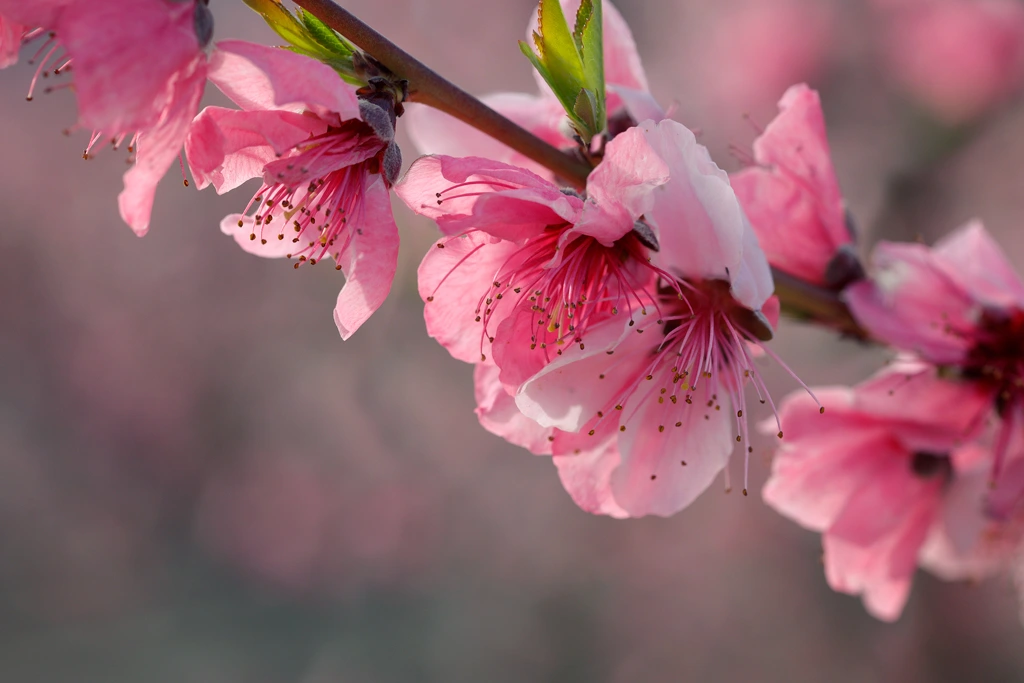
The Pink Blanket of Cieza
Our day did not begin in the intimacy of a studio, but in the vastness of the landscape surrounding Cieza. For those who have never been: in February, this area of Murcia undergoes an almost surreal transformation. The vast fields of peach, almond, and apricot trees burst into an explosion of pink and white. This phenomenon, known locally as la Floración (The Flowering), attracts visitors from all over, but for our meeting with Jesús Núñez Perea, it served a deeper purpose.
Jesús, born in Cieza in 1967, has a deep-rooted relationship with this land. As we walked through the orchards, it became clear that the landscape is not just a backdrop for him, but a living archive. The blossoming is beautiful, but also ephemeral—a theme that fits perfectly with his philosophical background. As a philosophy teacher at a secondary school in Algezares, Jesús observes the world with an investigative gaze. He sees the cycles of blooming and decay, the layers of time superimposed upon one another.
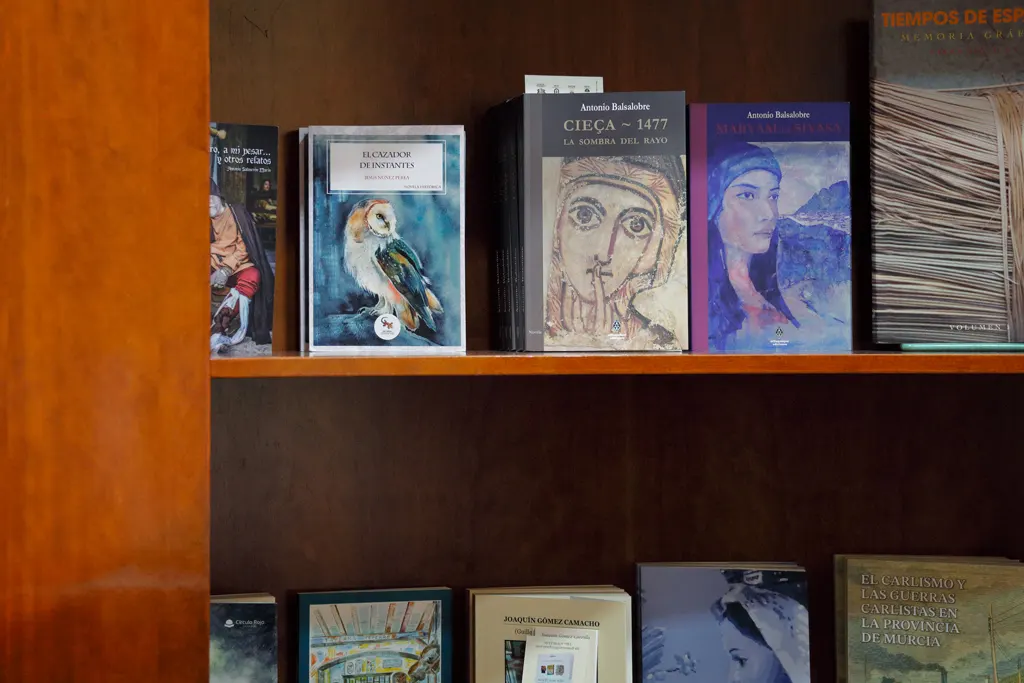
The book “Cazador de Instantes” at the entrance of the Siyâsa Museum
Medina de Siyâsa: Where Time Seems to Have Stood Still
Following the visual stimuli of the orchards, we moved to the heart of the city of Cieza, to the Siyâsa Museum. There lies the key to Jesús’s recent literary work.
Medina de Siyâsa, located on the steep slope of the Cerro del Castillo, is one of the most important archaeological sites of Islamic culture in Spain. It offers a rare and detailed glimpse into daily life in Al-Andalus at the end of the 12th century. What makes Siyâsa unique is that it is not a petrified monument to kings, but a city of common people. The houses, courtyards, and even the preserved utensils allow us to feel, nearly a thousand years later, how its inhabitants lived, cooked, and dreamed.
For Jesús Núñez Perea, this place was the birthplace of his historical novel, «El cazador de instantes» (The Hunter of Moments). It was no surprise that we continued the photo shoot at the museum, where the walls of reconstructed houses seem to hold the echoes of his characters.
The Writer and His Vision: Jesús Núñez Perea
Although Jesús spends his daily hours guiding young people through the labyrinths of philosophy, in recent years he has found a powerful voice in literature. His work as a novelist is an extension of his philosophical inclination: he poses questions about identity, history, and the value of the small moment.
In «El cazador de instantes», he takes us to the end of the 13th century. While history books often focus on battles and treaties, Jesús focuses on human everyday life. How do you survive in a border city like Siyâsa when the world around you is changing? How do you maintain dignity in the mundane? His prose is meticulous, almost photographic, thus closing the circle with our photo shoot of the day. He does not chase grand gestures, but rather that instant in which a truth surfaces.
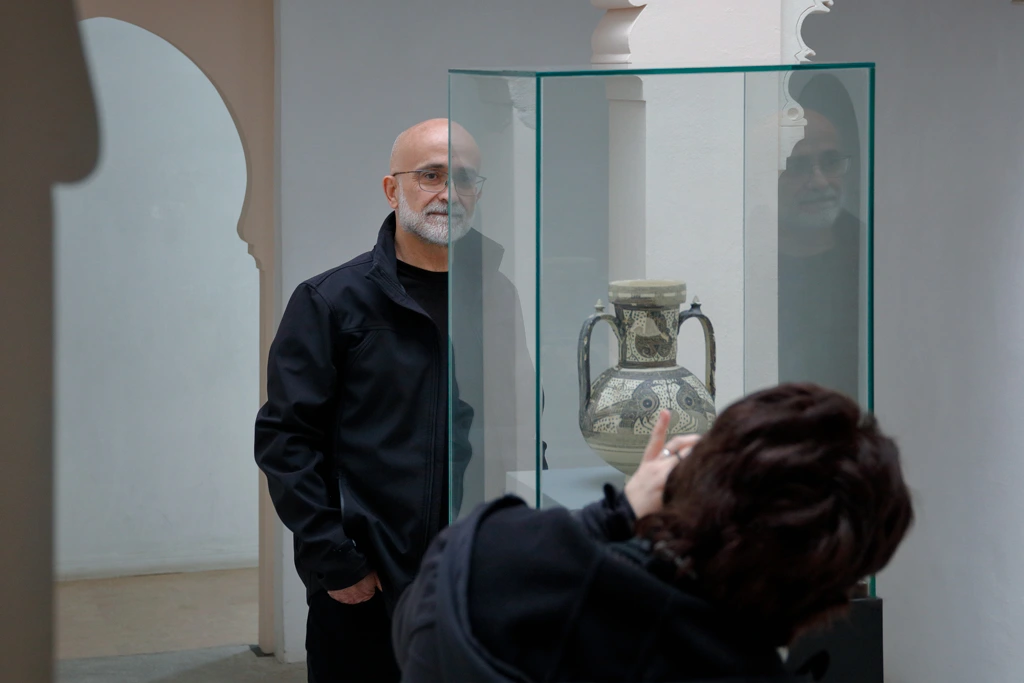
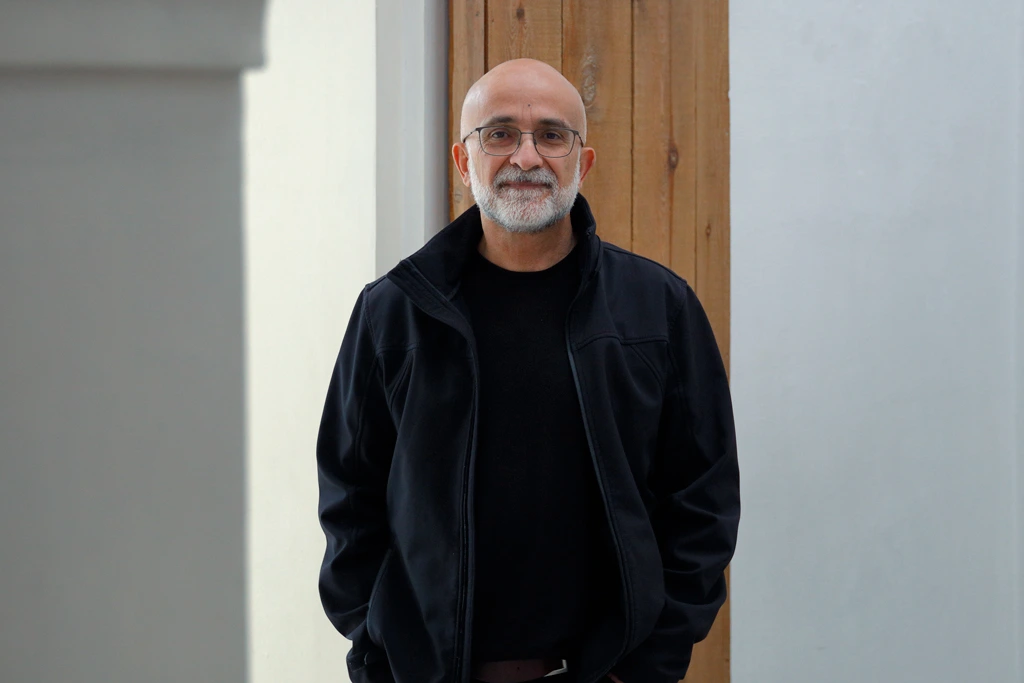
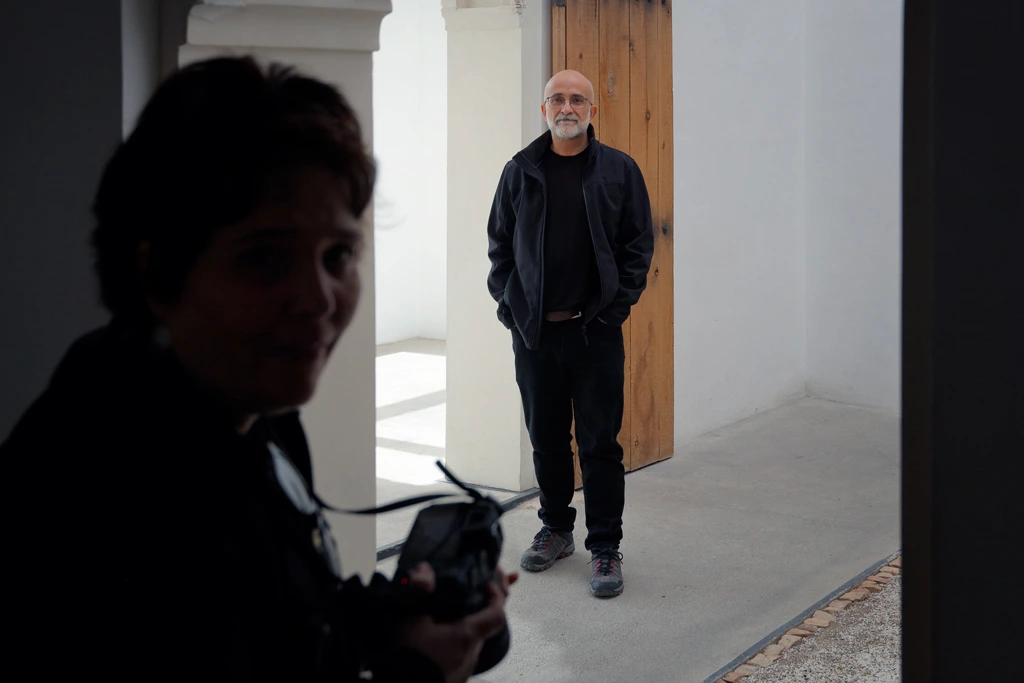
Portraying the writer Jesús Núñez Perea in the museum
The Photographer’s Gaze: Emilia Valdivieso
During this artistic expedition to Cieza, I was accompanied by the photographer Emilia Valdivieso. Her role was crucial; she had to translate the abstract bond between the author and his historical subject into a visual image. Throughout the day, we saw her constantly in action, searching for the right light and the perfect angle.
One of the most striking moments in the museum occurred when Emilia used a glass display case as a compositional element. Inside the case was an ancient Moorish jar, taken directly from the excavations of the Medina of Siyâsa.
Emilia positioned Jesús so that, through the glass and his reflection, he looked at the jar. This play of glass and reflection created a layered image. The writer and the artifact from the past met in the same frame, separated by glass but united by the gaze. This visual effect reinforced the central message of Jesús’s work: the unbreakable bond between the author and the history he describes. It was as if Jesús were not just looking at an object, but looking through a window in time to observe the inhabitants of Siyâsa directly in the eyes. These photographs are not mere portraits; they are visual metaphors for his creative process and will play a central role in the upcoming advertising campaigns for his book.
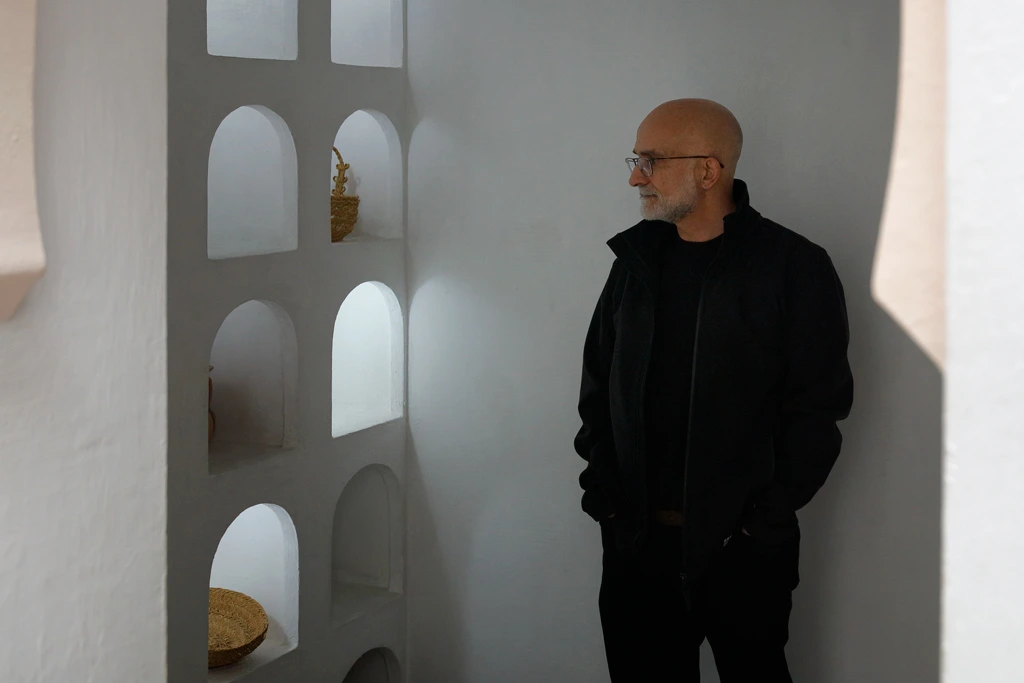
The moment hunter – El cazador de instantes
A Dialogue Between Past and Present
What made that day special was the constant dialogue. Among the cherry trees, we spoke of the fleeting nature of beauty; in the museum, of the hardness and tenderness of medieval life. Jesús spoke of the challenges of writing a historical novel without falling into clichés. He wanted the reader to be able to smell the dusty streets of Siyâsa and feel the roughness of the clay.
Emilia captured everything with her camera. Each click of the shutter was an attempt to catch an “instance”—the same hunt that Jesús describes in his book. The synergy between the photographer and the writer was palpable. Both are hunters of moments, one with light and the other with ink.
Farewell to Cieza
After a long and extremely productive day, we left the pink fields of Cieza behind. The return to the city of Murcia was a moment of reflection. We left behind a place rich in culture and heritage, but we brought something valuable back: a series of images that bridge 13th-century Cieza with the contemporary writer.
Cieza is much more than fruit orchards; it is a place where the earth speaks through its ruins and its artists. The photo shoot with Jesús Núñez Perea, facilitated by the mastery of Emilia Valdivieso, proved that history is never truly “past” as long as there are people willing to tell and record its stories.
With the photographs in hand and the story of «El cazador de instantes» in our minds, we look forward to the publication of this series. It is a tribute to a writer who has not forgotten his roots and to a city that slowly reveals its secrets to those who observe it with care.
Follow Jesús on Facebook: Jesús Núñez Perea or Instagram: @jesusmoiras