The mountain village of Boquete
Between 2014 and 2015, my life was anchored almost continuously in the heart of Panama, specifically within the mountain village of Boquete. Located near the Costa Rican border, this lush, high-altitude region became the backdrop for a deeply profound and challenging chapter of my professional life. I was deployed there to guide and coordinate the grueling search operations for Kris Kremers and Lisanne Froon, the two young Dutch women who had tragically vanished into the dense, tropical cloud forests surrounding the town. It is a long, complex story, where my primary objective was to document the search efforts and manage communication in a highly critical environment.
During the rare, quiet moments
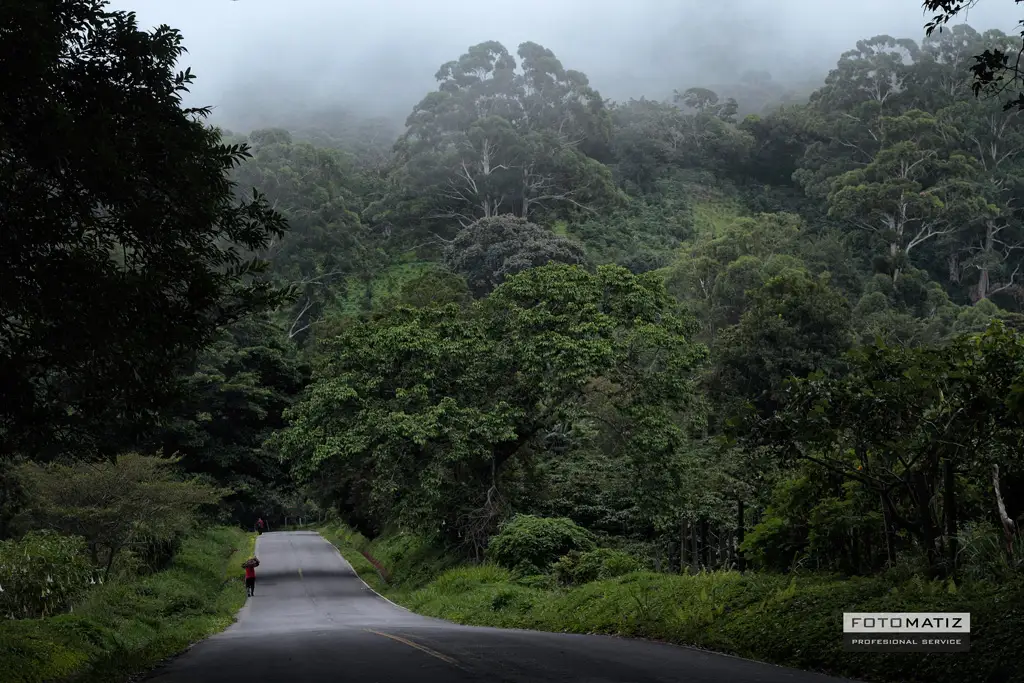
Yet, even amidst the gravity of a high-profile search mission, the striking essence of Panama found a way to break through. During the rare, quiet moments when the search teams were grounded or during brief intervals of respite, I picked up my camera to capture the daily rhythm of the village and its surrounding wilderness. Photography became a vital creative outlet, a way to process the immense weight of the situation by observing the enduring beauty of local life moving forward.
The main entrance to Boquete
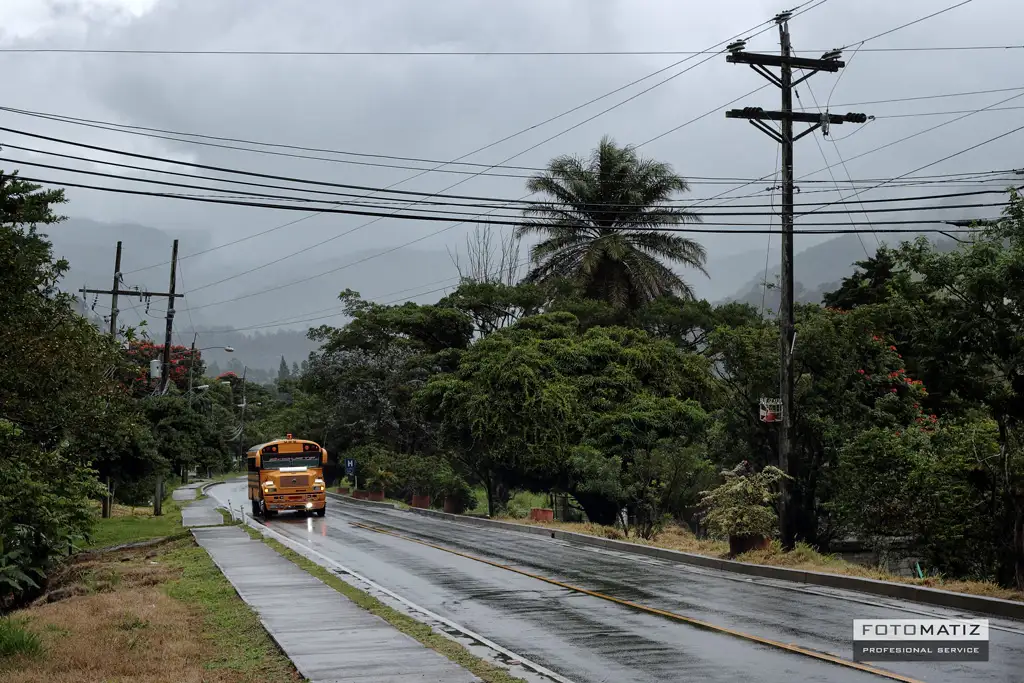
One particular image stands out as a defining memory of that bittersweet era. It captures a characteristically rainy afternoon on the main road leading out of Boquete. Piercing through the grey mist and reflecting off the wet asphalt is a vibrant, characteristic orange-yellow transit bus, a classic American model repurposed into a vital lifeline for local commuters. In Panama, these robust, colorful vehicles are far more than just practical transportation; they are moving cultural landmarks that inject brilliant color into the landscape.
The Buenas Aires avenue in Palo Alto – Boquete
A fundamental characteristic
The rain falling in that photograph is not a seasonal anomaly but a fundamental characteristic of the region’s geography. Panama exists as a narrow, delicate land bridge in Central America, squeezing down to less than seventy kilometers wide at various points. Caught in a permanent embrace between the Atlantic and Pacific Oceans, the country acts as an atmospheric funnel, resulting in sudden, dramatic downpours that feed the surrounding emerald-green mountains. The rain in Boquete shapes absolutely everything, from the dense cloud forests on the trails to the quiet mood of the village streets.
An extraordinary experience
Looking back, my extended stay in Boquete remains an extraordinary, deeply meaningful experience. It was a period marked by intense focus, teamwork under immense pressure, and a shared pursuit of answers, all unfolding within a staggeringly beautiful landscape. While the search itself was a solemn duty, casual snapshots like the orange bus cutting through the tropical rain serve as lasting anchors to the human side of that journey. They remind me of the resilience of the local community, the unique geography of the Central American isthmus, and the unforgettable visual tapestry of a year spent on the edge of the Panamanian jungle.