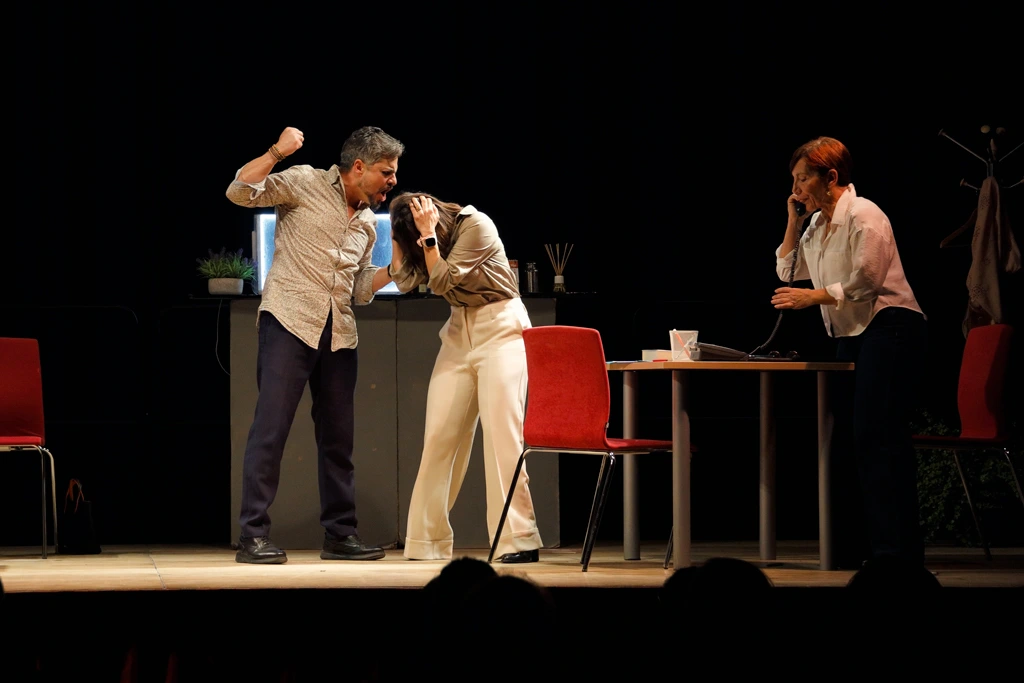
An intense confrontation on stage
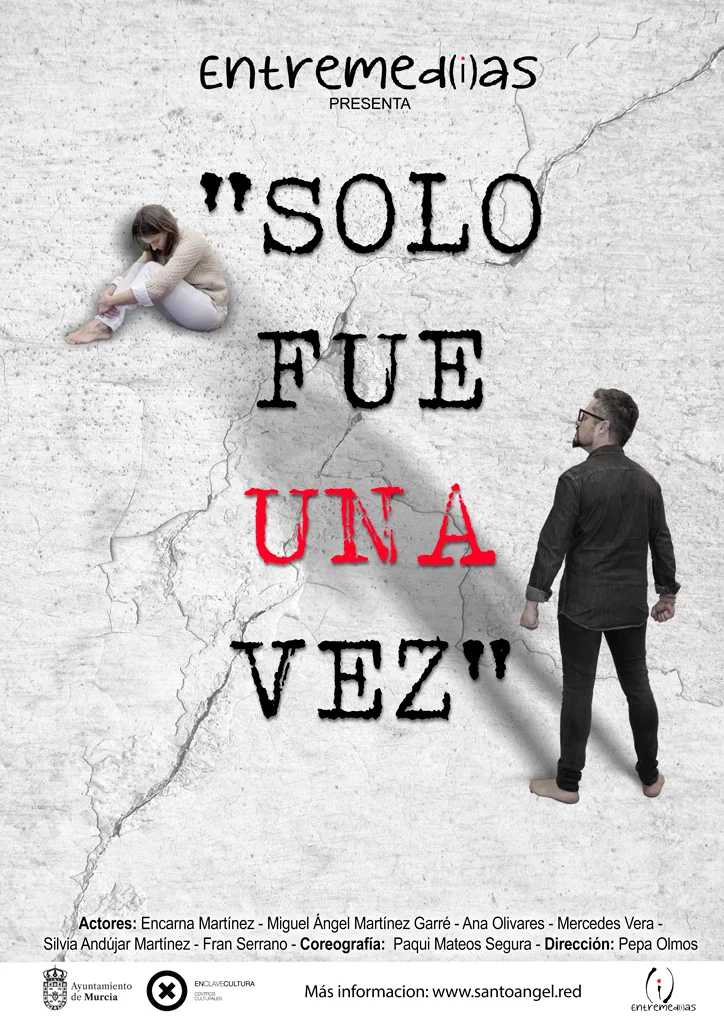
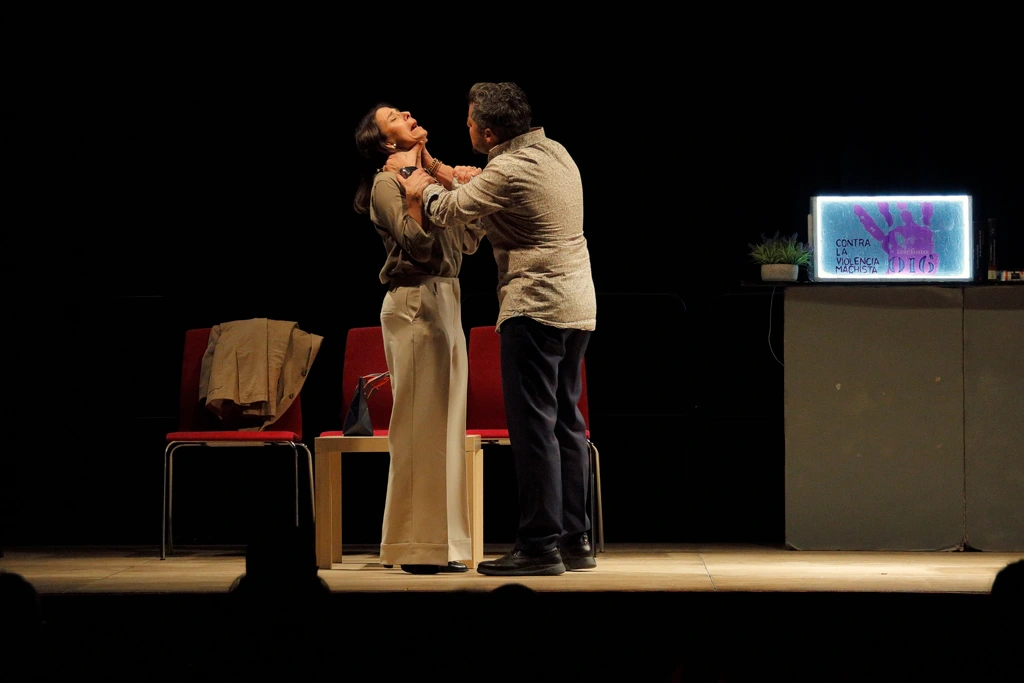
Last Friday, I attended the theater production “Solo fue una vez“, or “It only happened once” to take photographs of the play. Not only because the subject, gender-based violence, is close to my heart for more than one reason, but also because I created graphic work, including the promotional poster, for this performance.
The play opens fittingly with a tango. After all, the tango is much more than a series of dance steps; it is a non-verbal conversation and a powerful metaphor for human relationships, passion, and surrender. Because this original immigrant dance of loneliness and homesickness has no fixed choreography and is improvised on the spot, its essence revolves entirely around chemistry and communication in the here and now. Through physical contact, a temporary yet deep connection is sought to briefly forget harsh reality.
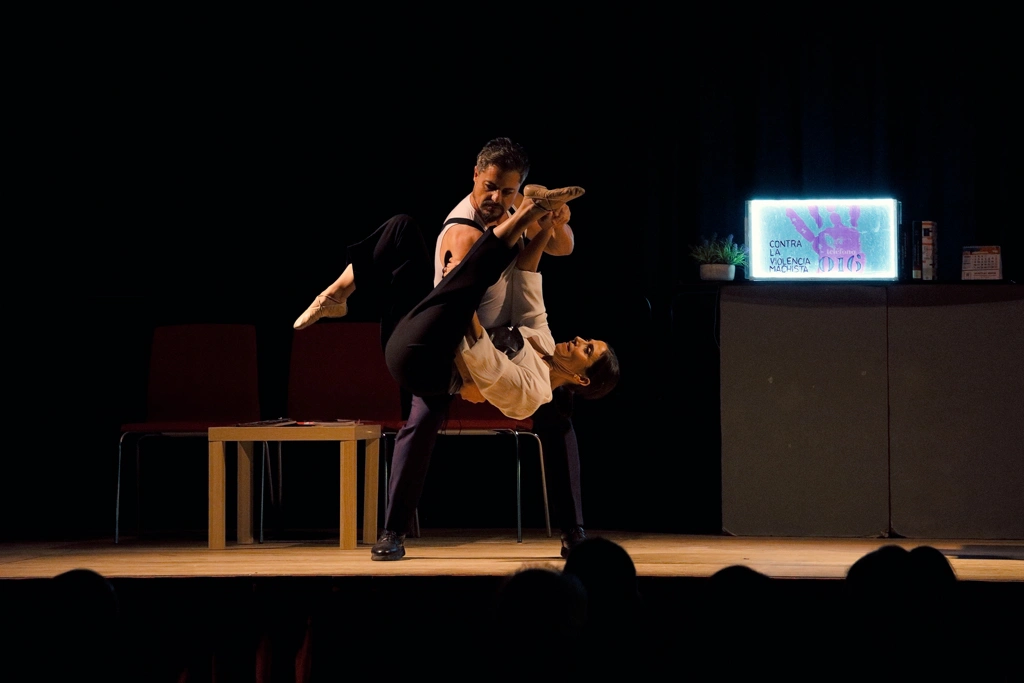
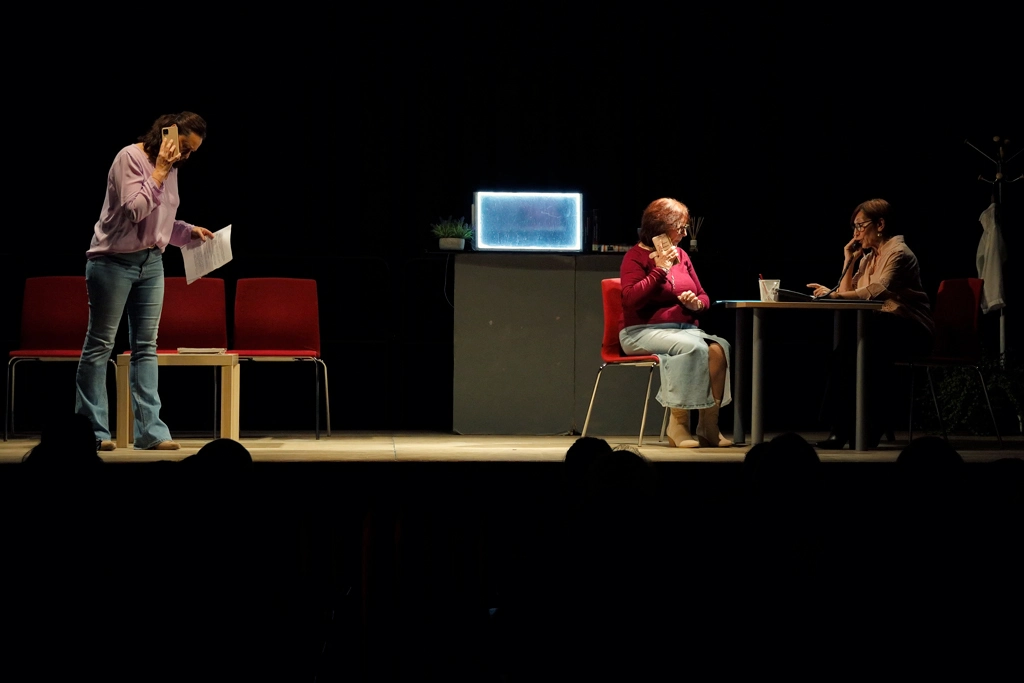
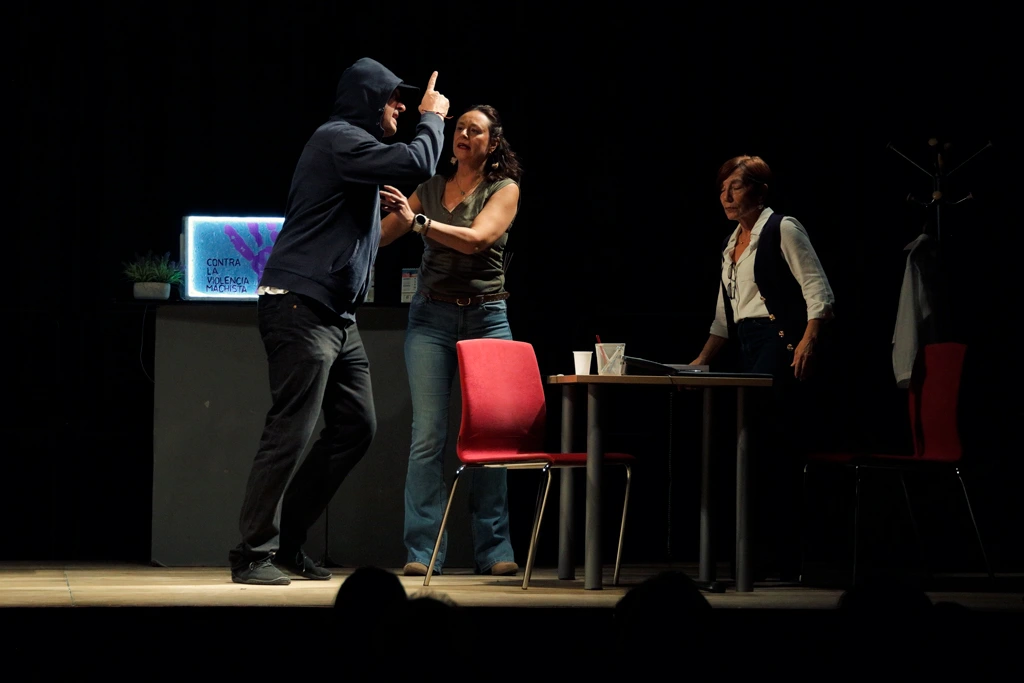
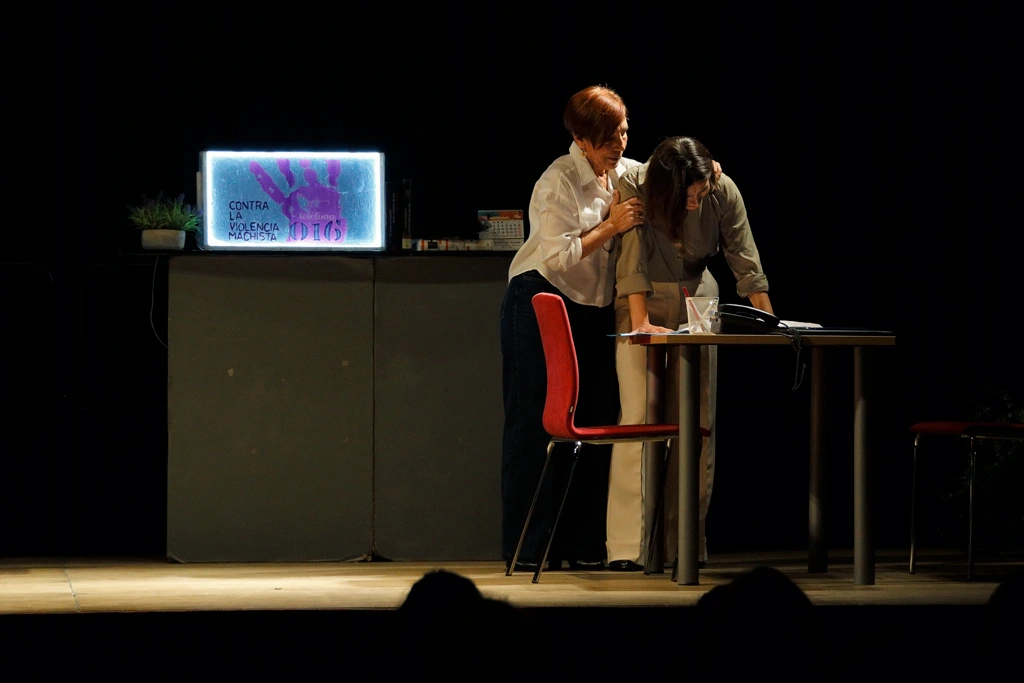
From that dance, the story unfolds inside a “Centro de Atención Social” or Social Services Center, where an egocentric and narcissistic man is undergoing mandatory treatment with a psychologist following domestic violence and a report filed by his father-in-law.
Bit by bit, the abuse is dissected and all the painful facets of domestic violence come to light. The fact that we were dealing with amateur theater detracted nothing from the quality of the production. The tension in the room was palpable, and the dialogues were fluid and oppressively realistic. This performance is a necessary call to draw attention to a major social problem that occurs more often than we realize and destroys lives.
Solving problems instead of looking away
To truly improve our society, we must openly discuss and address such problems. Looking away, downplaying, or even glorifying only makes the situation worse, especially for the vulnerable groups who are the victims. Nevertheless, we see a worrying trend today in which gender-based violence is increasingly downplayed, particularly from the far right. Through social media, the so-called manosphere influences many young men by promoting macho behavior and portraying women as subordinate objects for use. Love and care are dismissed as weakness and unmanly, which only increases the breeding ground for violence. Precisely for that reason, it is essential that we enter into dialogue and, through art and theater, are confronted with what happens behind the front door—perhaps right next door with our own neighbors.
Experience behind the scenes of the justice system
Alongside my graphic involvement, I have a deeply rooted personal connection to this subject. What many people do not know is that for years I have dealt, as an interpreter, with cases involving gender-based and domestic violence. I have assisted countless victims, mostly women, during their difficult journey through police and legal protocols. Those experiences often left a bitter taste and came back sharply into focus while watching this performance.
At the same time, I also want to highlight the other side of the coin. Although victims are usually women, that is certainly not always the case. Over all those years, I have also assisted male victims. In those files, legally speaking, we do not talk about gender-based violence, but about domestic violence in Spain at least. The striking difference in the cases with male victims was the absence of physical violence; I have never worked on a case in which a man was physically abused, but exclusively on cases of psychological violence, a situation that, incidentally, in many cases could have come dangerously close to a physical counter reaction toward the female aggressor.
Equality before the law and legal inequality
Here in Spain a fundamental legal distinction emerges with far-reaching consequences for the administration of justice. In gender-based violence, the aggressor is by definition a man, and the victim is always a woman. In domestic violence, both the perpetrator and the victim can be any member of the family, regardless of sex. Spanish legislation makes this distinction because gender-based violence is legally based on structural inequality and historical power relations between men and women, whereas domestic violence revolves around abuse of trust and disrupting family peace.
This difference has consequences for legal proceedings and sentencing. The Penal Code often applies higher minimum sentences for gender-based violence than for the same behaviors under the label of domestic violence. Moreover, recognized status as a victim of gender-based violence under Organic Law 1/2004 grants direct access to specific employment, financial, and housing rights, such as special benefits and priority for social housing. Precisely on this point, the far-right harps on the argument that men are discriminated against.
Although the legislator’s intention is understandable—namely, protecting the most vulnerable party—this clashes with a fundamental legal principle. Before the law, men and women should be equal; unequal treatment based on sex is essentially not fair.
For completeness, it is good to know that the Spanish Constitutional Court (Tribunal Constitucional) ruled in 2008 that this law does not conflict with Article 14 of the Spanish Constitution (the principle of equality), because there is an “objective and reasonable justification” (affirmative action to protect a vulnerable group).
Freedom of expression as a driver of progress
In a polarized world in which political parties mainly try to pit citizens against one another, an open and nuanced conversation about these legal and social tensions hardly seems possible anymore. Precisely for that reason, freedom of speech and artistic expression are so indispensable. Culture and theater offer a free space in which we are challenged to think, debate, and work toward a better and fairer society. Any political party or movement that tries to censor or suppress this form of free expression must be viewed with the utmost suspicion. After all, repression never leads to progress or solving problems. “Solo fue una vez” was therefore more than worth it: it offers an honest, confronting insight into the complex dynamics between perpetrator and victim and shows the human stories hidden behind these loaded legal concepts.
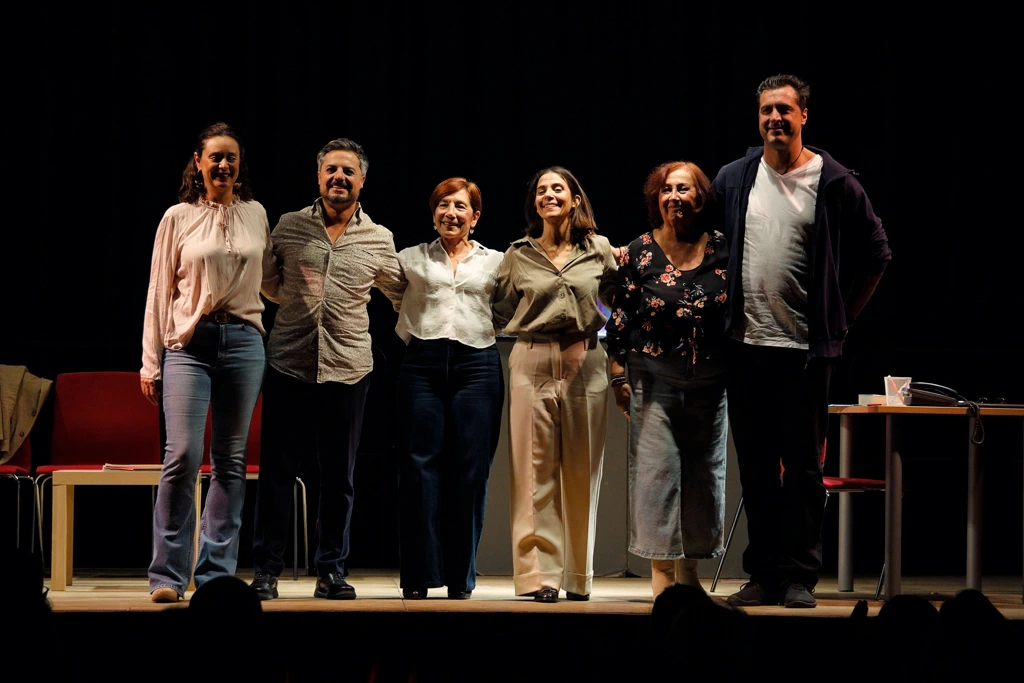
Behind the lens during a charged performance
Finally, a few words about the photos I took during this performance. As is so often the case in theater photography, the conditions were far from ideal for creating a series of images that truly convey the atmosphere and emotion of the play. Low light, actors who are constantly moving and standing far apart on stage, and the constant surprise of what happens in the next moment: it requires sharp anticipation of what is coming, or of what you expect is coming. After all, you want to capture the core of a scene and especially the expression on the performers’ faces at the exact right moment.
At the same time, you do not want to disturb the performance and the audience in any way by constantly walking back and forth or making unnecessary noise. Especially in a play like this, in which a telling silence often fell after an intense scene, you do not want to break that tension. That is why I usually choose a fixed, central spot at the back of the auditorium, with a sturdy zoom lens and a high ISO setting to capture moving actors as sharply as possible. Based on the accompanying images with this article, the viewer can judge for themselves whether that succeeded.
Are you a victim of gender-based violence in Spain, or do you know someone who is? You are not alone.
If you are experiencing abuse in Spain, please contact the free, confidential helpline at 016. The service is available 24 hours a day, 365 days a year, in 53 languages. Calls do not appear on your phone bill (remember to delete the call from your phone’s call log). You can also reach out via WhatsApp at (00 34) 600 000 016 or by email at [email protected].
Promotional poster