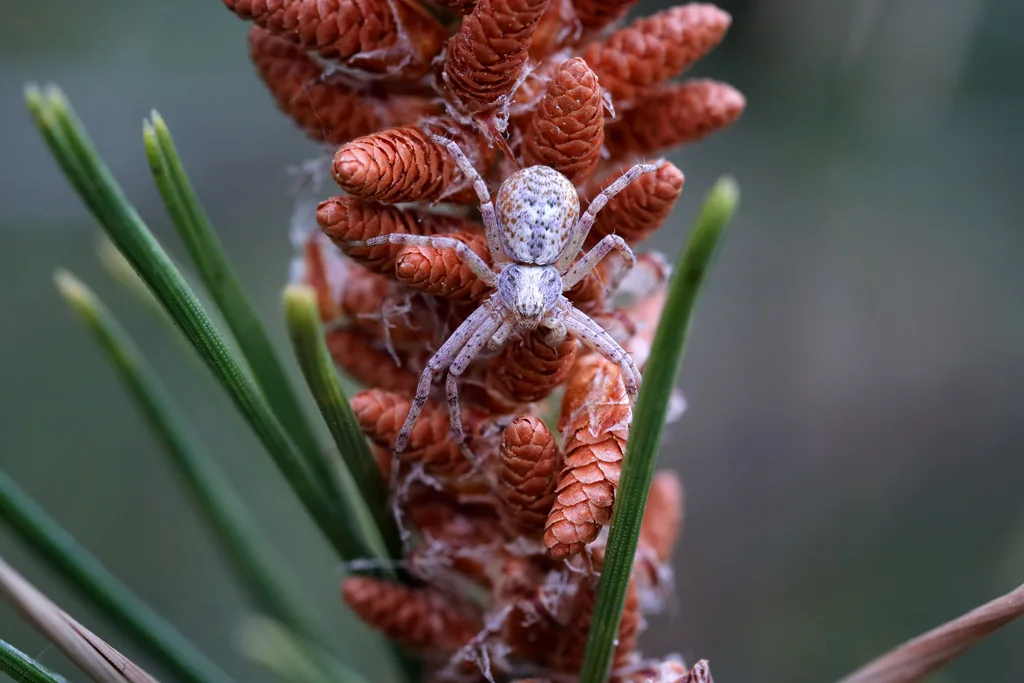
A Running Crab Spider in Santo Ángel
Photography is about far more than dialing in the right shutter speed, selecting an optimal aperture, or building a balanced composition. At its core, photography revolves around truly learning how to see. Perceiving what happens around you is surprisingly less self-evident than it seems. Most people unconsciously walk right past countless stunning details because of how human vision works, as the brain continuously decides what reaches conscious awareness and what gets ignored. A visit to Monteliso in Santo Ángel, nestled in the Murcia region of Spain, serves as a perfect reminder of how much life thrives in plain sight if we simply take the time to observe.
Mastering the Art of Pine Tree Camouflage
Among the Mediterranean pines of Monteliso lives Philodromus pinetorum, a species of running crab spider belonging to the family Philodromidae. The specific epithet pinetorum comes from Latin, meaning belonging to pine groves or living among pines. This strictly arboricolous creature spends its entire life high in the canopy and lower branches of conifers, particularly Mediterranean species like the Aleppo Pine (Pinus halepensis) and Maritime Pine (Pinus pinaster).
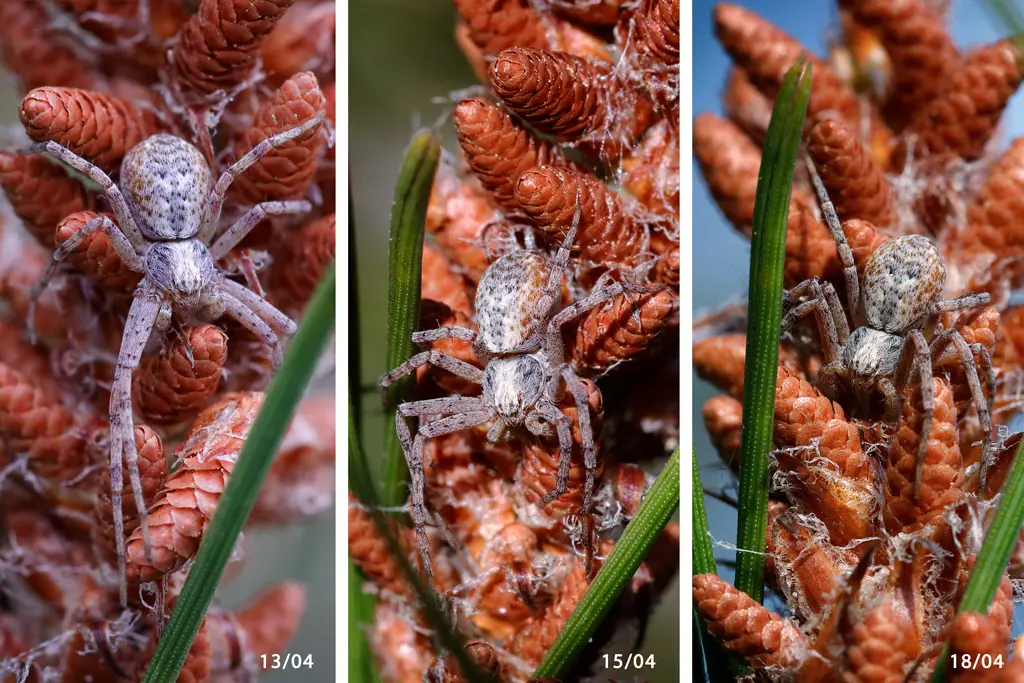
Measuring just five to seven millimeters for females and four to five millimeters for males, these tiny arachnids possess dorsoventrally flattened bodies that allow them to press tightly against pine needles or slip into micro-crevices beneath pine bark. Their coloration is a mottled mix of pale grey, yellowish-white, tan, and dark brown, featuring a subtle leaf-like pattern along the abdomen. This disruptive camouflage breaks up their outline against pine bark, lichen-covered twigs, and pollen cones, making them virtually invisible.
Precision Hunting in the Canopies of Murcia
Unlike many spiders, Philodromus pinetorum does not build webs to capture food. Instead, it sits motionless on pine needles, relying on camouflage to remain hidden from both prey and predators. Equipped with longer second legs that grant exceptional agility and crab-like sideways mobility, the spider uses visual cues and sensory hairs to detect fine vibrations.
The moment an aphid, small moth, or leafhopper lands nearby, the spider explodes into a high-speed sprint to capture its meal. When threatened, it quickly scrambles to the opposite side of a pine needle to keep the branch between itself and danger.
Architecture and Protection in a Single Needle Sleeve
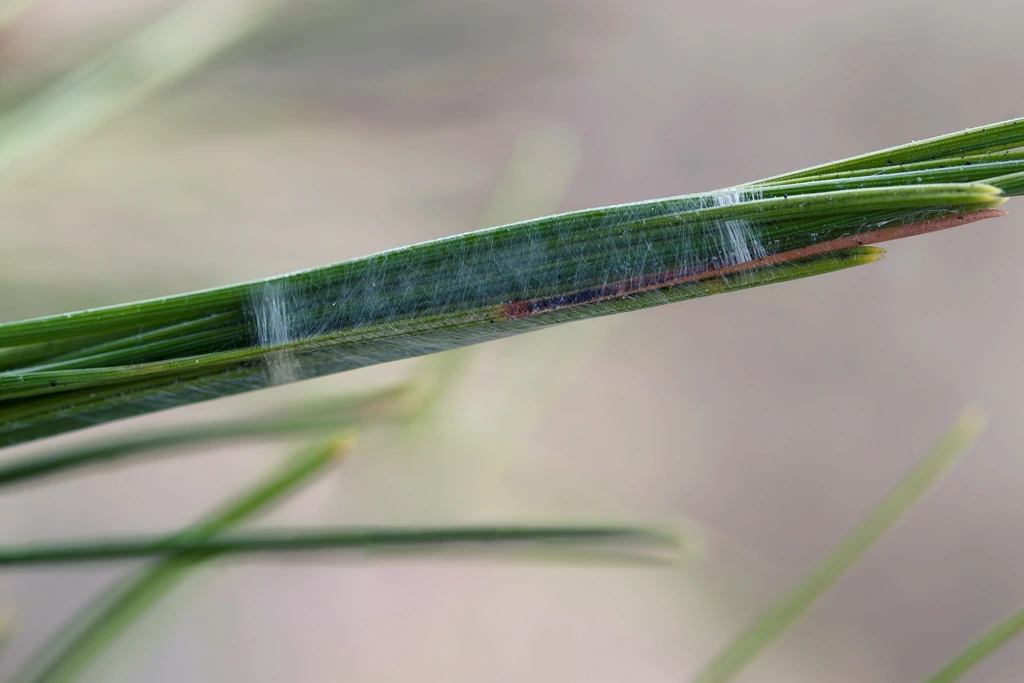
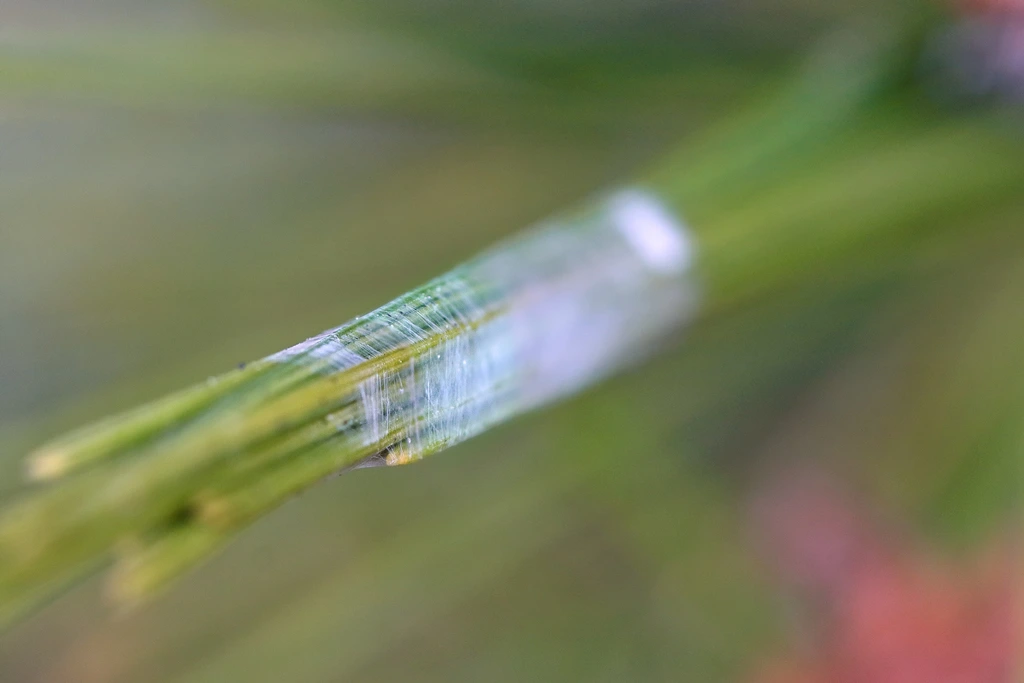
During the reproductive phase from late spring to mid-summer, female running crab spiders demonstrate remarkable engineering. The female pulls adjacent pine needles together using strong silken threads to create a protective tubular sleeve. Inside this custom-built shelter, she constructs a lens-shaped silken egg sac and remains on guard to defend her brood against parasitic wasps and birds.
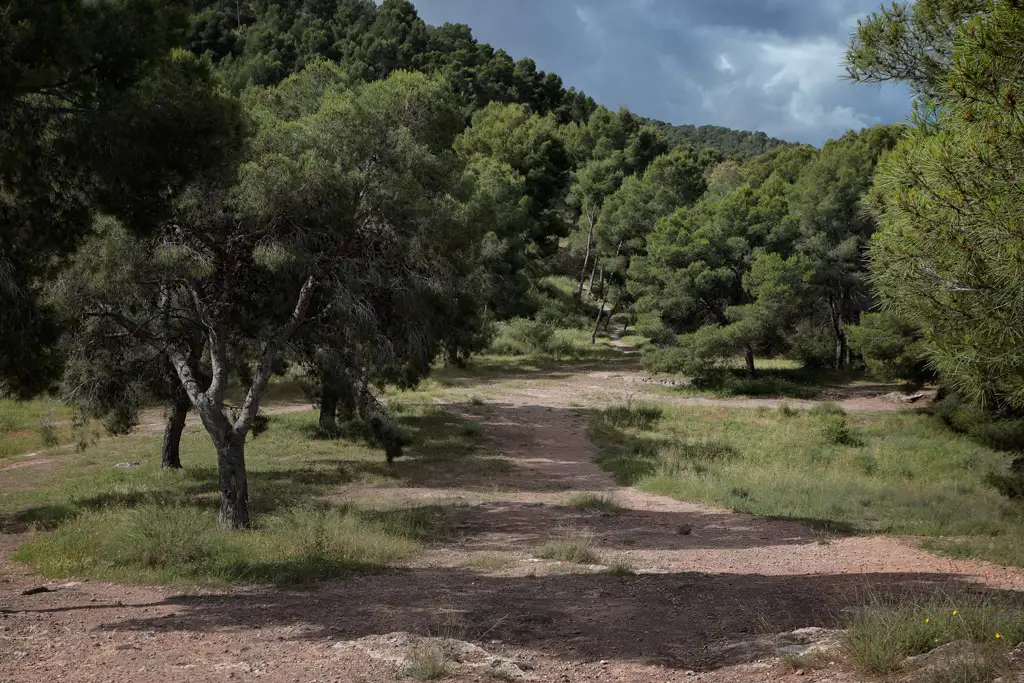
All of this intricate behavior unfolds on a single plot of land in Santo Ángel, provided you remain open to seeing it. You do not have to travel far to experience such wonders; remarkable stories thrive wherever greenery exists, waiting for observant eyes to discover them.