The Tranquil Beauty of Embalse de la Cierva
Back in 2007, I embarked on a visual documentation project in Mula commissioned by Proconsa S.A., a Spanish enterprise that is no longer operational today.
A Twilight Photography Assignment Along the RM-15 Highway
My primary assignment was to capture images of an rural estate, or finca, situated directly along the Del Noroeste-Rio Mula (RM-15) motorway, immediately adjacent to the Embalse de la Cierva reservoir in Mula. At the time, Proconsa intended to acquire this sizable plot of land and transform it into a thriving commercial industrial park. Although the company successfully finalized the land purchase back then, the planned industrial development ultimately never materialized.
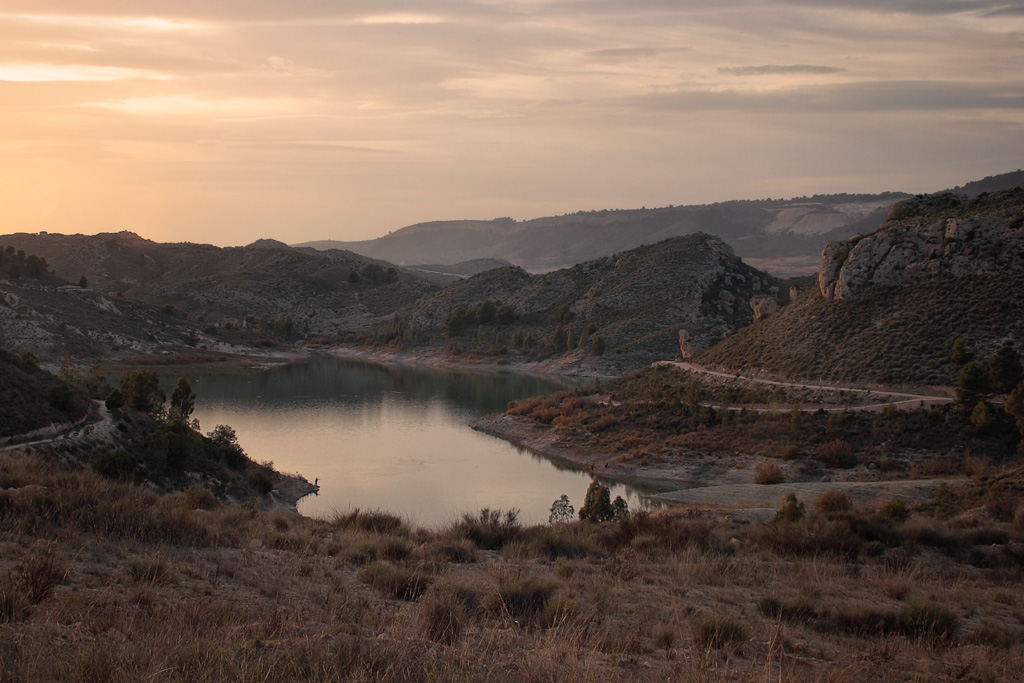
While navigating my route around the perimeter of the vast property, I reached the elevated banks of the Embalse de la Cierva reservoir just as dusk began to fall. The fading evening light cast serene reflections across the water, creating a striking atmosphere. Capturing that quiet transition from day to night resulted in a memorable collection of twilight photographs of the reservoir, preserving a serene moment in time before any potential construction could alter the landscape.
The Architectural and Strategic Legacy of La Cierva Reservoir
The Embalse de la Cierva reservoir plays a vital ecological and agricultural role within the Region of Murcia. Fed from the north by the flowing waters of the Mula River, the initial plans for constructing this impressive engineering structure were drawn up during the early years of the twentieth century. However, physical construction did not officially commence until 1915. During that same year, the reservoir received its official designation in honor of Juan de la Cierva y Peñafiel, an influential political figure who served as the Spanish Minister of Public Works and represented the municipality of Mula as a Member of Parliament starting in 1896.
From Economic Challenges to Modern Water Management
Bringing the reservoir from blueprint to reality proved to be a prolonged and arduous journey. Severe economic obstacles slowed construction progress considerably across several decades, delaying its official inauguration until 1929. Furthermore, it was not until 1946 that the basin was filled with water for the very first time. To meet modern regional demands, comprehensive renovation and expansion works were executed in 1992. Engineers successfully raised the height of the main dam wall, expanding the total water storage capacity of Embalse de la Cierva to seven cubic hectometers. Today, this historic site stands as both an essential hydraulic asset and a breathtaking scenic location in southeastern Spain.
More information: