Mastering Macro Photography with Drinking Wasps
Learn how understanding insect behavior and macro lenses allowed a photographer to safely capture close-up frames of wasps drinking water.Precision Optics in Commercial and Field Photography
Macro photography serves a vital dual purpose in visual storytelling. Beyond capturing intimate wildlife portraits, macro lenses are essential workhorses in commercial e-commerce, offering the precise one-to-one scale magnification required for intricate product shoots like luxury timepieces, fine apparel, and detailed electronics. True macro lenses allow photographers to fill the sensor with minute details while maintaining crisp edge-to-edge sharpness. However, taking these specialized optics out of the studio and into natural environments offers a refreshing test of patience and technique, transforming commercial gear into an instrument for biological discovery.Testing Glass: Summer 2008 and the Fountain Gathering
In the summer of 2008, acquiring a new Canon one-hundred-millimeter macro lens provided the perfect motivation to explore field photography during a break from client assignments. Every lens possesses unique handling characteristics, rendering quirks, and dynamic focal limits that require hands-on practice. During that period, insect populations were noticeably more abundant than they are today. While testing the glass outdoors, a group of wasps gathered around a shallow water basin as part of a garden fountain. While observers nearby expressed disbelief at approaching a swarm of stinging insects, remaining calm and observing their true intent allowed for a safe, close-up study.Understanding Wasp Ecology to Capture the Moment
Photographing insects up close relies heavily on understanding their natural motivations. During midsummer, wasps gather water to hydrate and cool their hives, posing virtually no danger to humans when approached with steady, non-threatening movements. Their aggressive reputation largely stems from late autumn, when the colony stops producing larvae and worker wasps lose their primary source of sweet secretions, driving them to scavenge for sugary human beverages. In contrast, wasps collecting water on a warm summer day are entirely pre-occupied with their survival duties and ignore nearby camera gear. By maintaining smooth movements and positioning the lens just inches from the water's surface, it was possible to capture crisp, detailed frames of a wasp quenching its thirst. Neighbors watching from a distance warned that getting so close was reckless, yet the encounter proved that respecting wildlife behavior eliminates unnecessary fear. Learning how insects interact with their surroundings unlocks extraordinary opportunities to document quiet, overlooked moments in stunning high definition.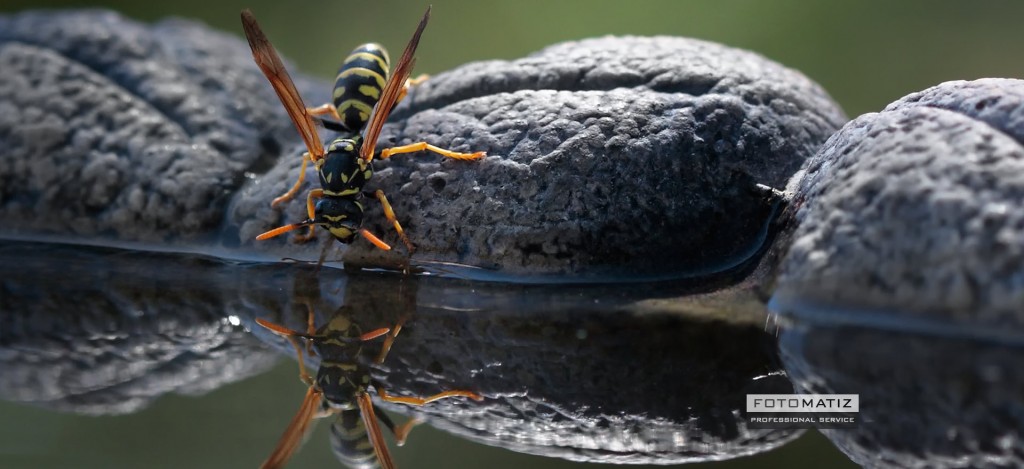
Little wasp drinking water