Capturing of Sulphur Tuft Mushrooms on the Dutch Forest Floor
Deep within the damp, moss-covered woodlands of the Netherlands, a hidden world thrives just out of normal sight. Macro nature photography has a unique way of bringing this miniature ecosystem to life, especially during the peak fungal seasons of autumn and spring. A close-up perspective of the forest floor reveals the striking, brilliant clusters of one of Western Europe’s most common yet captivating fungi: the Sulphur Tuft mushroom.
When exploring the image above, notice how these delicate organisms erupt in tight, dense clusters from the dark, rich soil and decaying organic matter. This specific growth habit is a hallmark of the species, creating a beautiful visual contrast between the moody, earthy tones of the Dutch woodland floor and the bright, luminous caps of the fungi.
Understanding Hypholoma fasciculare
Scientifically classified as Hypholoma fasciculare, the Sulphur Tuft is a saprophytic fungus, meaning it plays a vital role in the forest ecosystem by breaking down dead wood and recycling nutrients back into the soil. While they often appear to be growing directly out of the ground, they are usually attached to buried tree roots, decaying stumps, or fallen logs just beneath the leaf litter.
The name “Sulphur Tuft” perfectly describes their physical appearance. The caps display a distinct sulfur-yellow hue that transitions into a greenish-yellow tint toward the margins, while the center of the cap often matures into a deeper, orange-brown shade. The stems are slender, hollow, and flexible, weaving together to push the tightly packed caps toward the light.
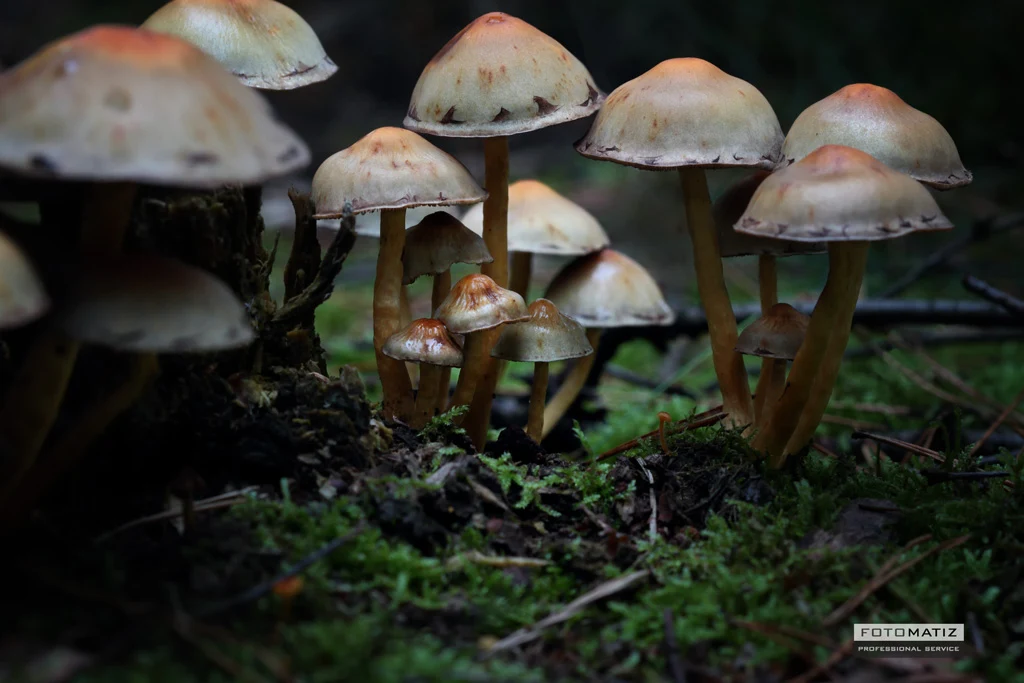
Sulphur Tuft Mushrooms on the Dutch Forest Floor
A Beautiful Visual with a Toxic Secret
For mushroom foragers and nature photographers alike, encountering a vibrant patch of Hypholoma fasciculare is always a highlight of a woodland walk. However, its cheerful appearance hides a dangerous trait. The Sulphur Tuft is notoriously poisonous, containing toxins that cause severe gastrointestinal distress if consumed.
Fortunately, nature provides its own warning system. The mushroom has an intensely bitter taste that generally prevents accidental ingestion, making it a subject best enjoyed strictly through a camera lens rather than on a dinner plate.
Photography ideas
For photographers looking to capture wild mushrooms in the Netherlands, tracking down these brilliant clusters offers the perfect opportunity to practice depth-of-field techniques. By keeping the camera low to the ground and focusing sharply on the leading caps, the background naturally softens into a dreamy, atmospheric blur, capturing the true, untouched essence of the Dutch wilderness.
This photograph was part of the exhibition “Change” in Murcia in 2014