The Rise and Fall of Mula’s Cofrusa Canning Factory
Documenting the historic Cofrusa canning factory in Mula, Spain, offers a rare glimpse into a vanishing era of Murcian industrial power. Captured between 2003 and 2005 during my first years working as a professional photographer, these images preserve the memory of an agricultural juggernaut. While the massive factory building still stands along the countryside today, the company went bankrupt years ago, marking the end of a pivotal chapter in the region’s economic history.
Scale and International Impact of Murcia’s Canning Industry
During its height, Cofrusa represented the sheer scale of Murcia’s fruit and vegetable processing sector, an industry that peaked during the 1980s. Operations revolved around intense seasonal harvest campaigns (campañas), expanding the workforce dramatically based on regional agricultural yields. At peak production, over 1,500 employees worked on the factory floor, processing massive quantities of locally grown produce.
Cofrusa was not merely a local supplier; it was a major international exporter. The factory produced goods shipped across Europe, securing massive distribution networks in the United Kingdom as well as supplying major German supermarket chains like Lidl and Aldi. This high-volume output transformed Mula into a crucial industrial hub within the Region of Murcia, generating vital employment for thousands of families across the valley.
The Legacy of “Las Uvas de la Suerte”
Among its vast product line, Cofrusa earned widespread fame for an ingenious cultural product: Las uvas de la suerte (The Grapes of Luck). Rooted in the Spanish New Year’s Eve tradition of eating twelve grapes at midnight, Cofrusa introduced small tin cans containing exactly twelve peeled, seedless grapes preserved in light syrup. The product became a nationwide sensation virtually overnight, eliminating the hassle of preparing fresh fruit for the midnight countdown. Although its commercial peak lasted for only a few years, the product remains an iconic piece of modern Spanish consumer history.
Today, little remains of Murcia’s once-dominant canning legacy. Capturing these factory floors in full operation between 2003 and 2005 recorded more than just machinery and assembly lines—it preserved the human scale, economic ambition, and cultural heritage of an era that forever transformed the industrial landscape of Mula.
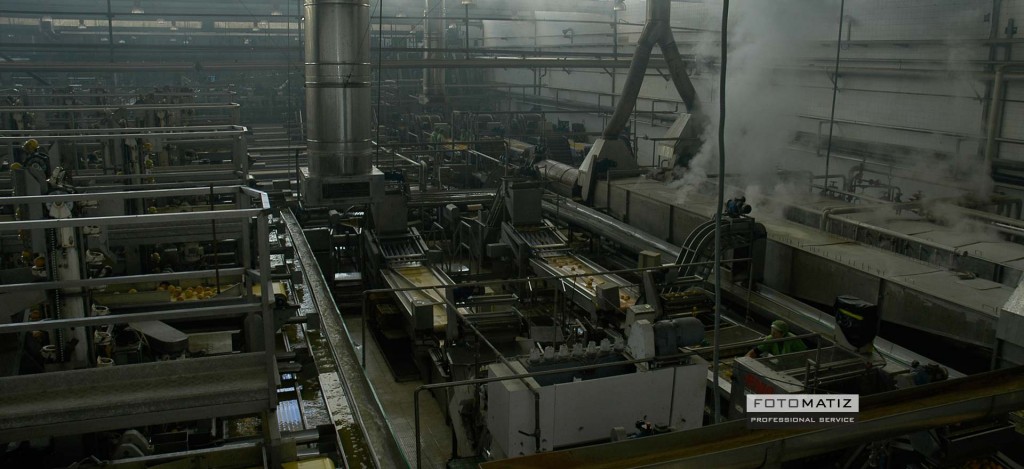
Old can factory in Mula.