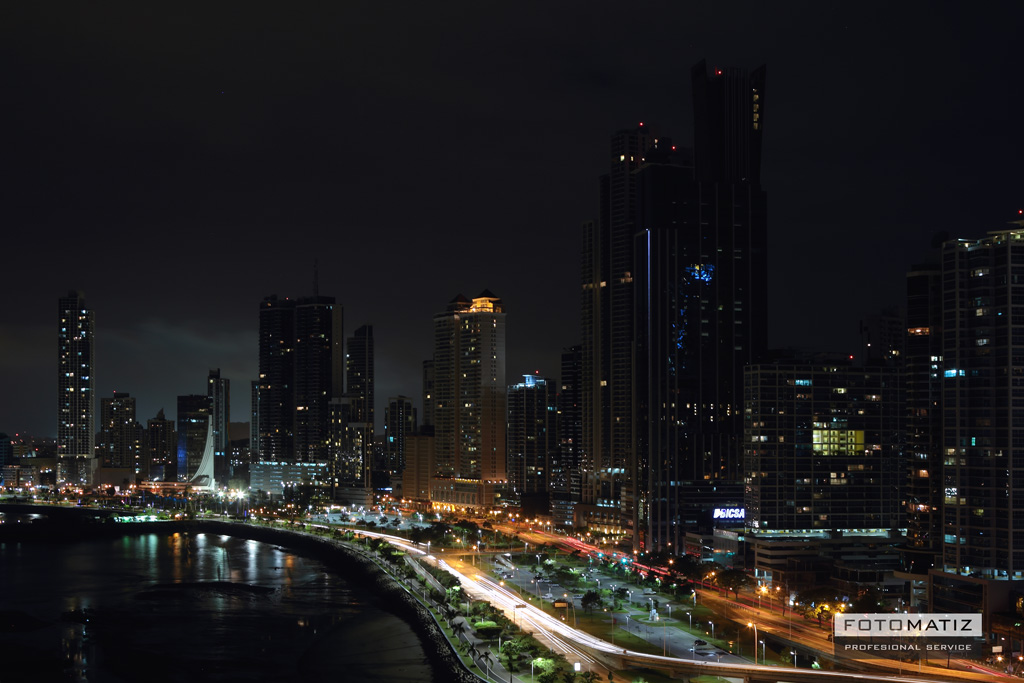
Amazing Panama city by night
In May 2014, my journey to Panama began under the heaviest of circumstances. Following intensive consultations in the Netherlands with the families of Kris Kremers and Lisanne Froon, I boarded a twelve-hour flight from Amsterdam Schiphol to Tocumen International Airport. I was deploying to Central America for what would become a year-long stay, dedicated entirely to guiding and coordinating the search operations for the two missing Dutch women in the mountainous jungles of Boquete. Landing late in the afternoon, a taxi whisked me away to a hotel in the heart of Panama City, a temporary staging ground before my flight the next morning to David, the capital of the Chiriquí province.
Waking Up to a Spectacular Skyline
Travelers who cross multiple time zones are intimately familiar with the disruptive power of jetlag. Deep in the Panamanian night, my body clock insisted it was two o’clock in the afternoon. Realizing that sleep was entirely out of the question, I pulled back the heavy curtains of my hotel room and was instantly captivated by the view. Below me lay a sprawling, glowing grid of Panama City by night, dominated by a major artery of the famous Panamericana highway snaking through the urban landscape. The glittering skyscrapers and pulsing river of headlights presented an overwhelming, futuristic contrast to the dense rainforests I knew I would be entering just a day later.
The Improvisational Photographer vs. Tropical Humidity
As an avid photographer, I knew I had to capture this scene, but I faced immediate technical hurdles. Long-exposure night photography requires absolute stability, and I had left my tripod behind. To gain enough height to shoot directly out of the open window rather than through the reflective glass, I had to improvise. I carefully stacked two hotel chairs on top of each other and used a soft pillow to cushion, level, and stabilize my camera body.
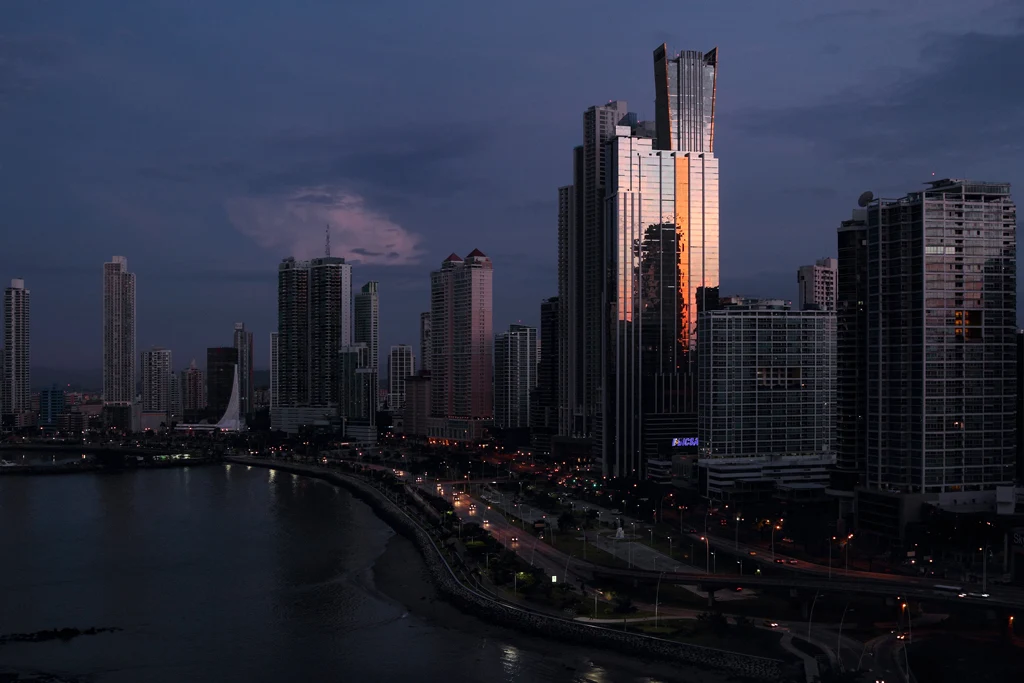
Panama City in the early morning sunlight
The moment I slid the window open, I encountered the second challenge of tropical photography: extreme humidity. The sweltering, moisture-laden night air rushed into the crisp, air-conditioned room, causing my camera lens to instantly cloud over with thick condensation. This sudden temperature shock completely blinded the glass, forcing me to wait patiently for the equipment to acclimate. Over the course of the next year, this constant battle with lens fogging became a recurring theme, whether I was stepping out of an air-cooled vehicle or moving between different microclimates.
A One-Time Memory of the Capital
Once the glass cleared and the camera adapted to the tropical heat, I stabilized the setup against the pillow and captured a beautiful series of sharp, long-exposure night shots. Looking back, these specific photographs hold a unique place in my archive. On all my subsequent trips through the capital over the following year, logistics required me to stay at a hotel directly adjacent to Tocumen Airport. Consequently, that sleepless, jetlagged night offered a singular, unrepeatable opportunity to witness the mesmerizing energy of urban Panama before disappearing into the quiet mystery of the northern highlands.