
How to Train Your Brain for Macro Photography
Unlock the art of seeing in macro photography. Learn how your brain processes visual details and master practical techniques to spot stunning, hidden subjects.
Train your brain for photography
Photography is about far more than dialing in the right shutter speed, selecting an aperture, or building a balanced composition. At its core, photography revolves around truly learning how to see. Perceiving what happens around you is surprisingly less self-evident than it seems. Most people unconsciously walk right past countless stunning details because of how human vision works. The brain continuously decides what reaches our conscious awareness and what gets ignored.
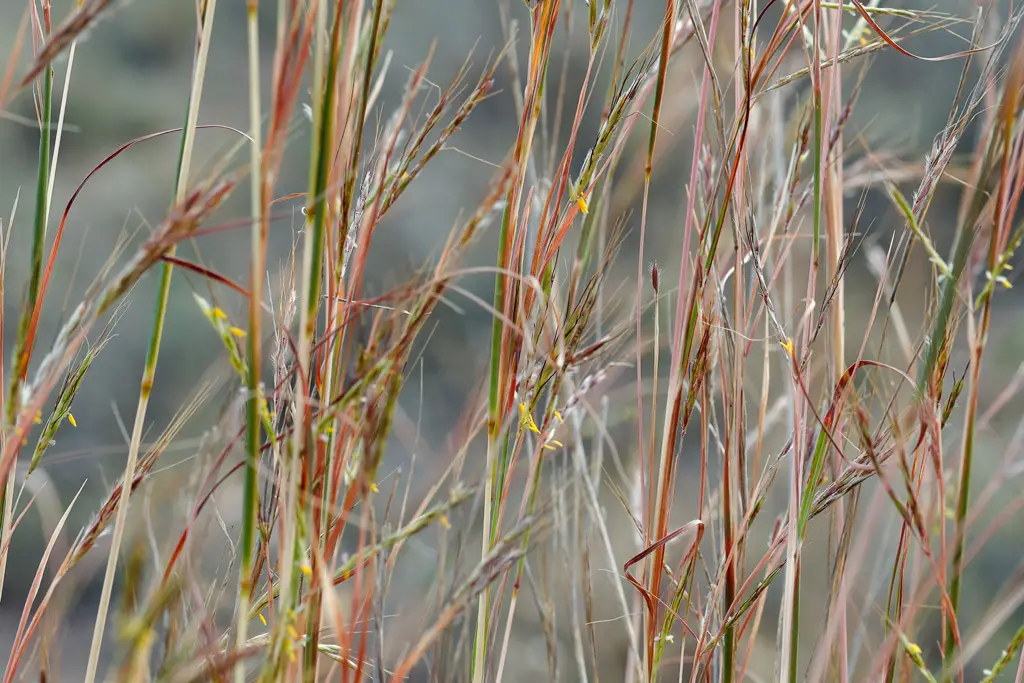
This doesn’t look special at all – Little Bluestem
The Biology and Psychology of Perception
Everyone processes environmental cues, minute details, and subtle shifts differently due to a complex interplay of biological, cognitive, and psychological factors. Every second, our senses are bombarded with millions of signals. To prevent total overload, the Reticular Activating System (RAS) in our brain filters out the vast majority. Your specific interests, goals, or current mindset dictate what slips through this filter. Someone interested in birdwatching will instantly spot a songbird that another person walks past completely unnoticed.
For neurodivergent individuals—such as those with autism, ADHD, or high sensitivity—this filter is often less restrictive. Their brains process more raw sensory data simultaneously, resulting in a heightened awareness of fine details, though it also carries a higher risk of sensory overload. Perceptual learning also plays a massive role: through experience, the brain builds recognition patterns. A botanist immediately sees five distinct plant species within a single bush, while a photographer registers the subtle play of light. Biological variations—such as rare tetrachromacy, which allows someone to perceive millions more color nuances—and emotional states shape our vision as well. Stress creates tight tunnel vision, whereas a relaxed mindset broadens your visual horizon.
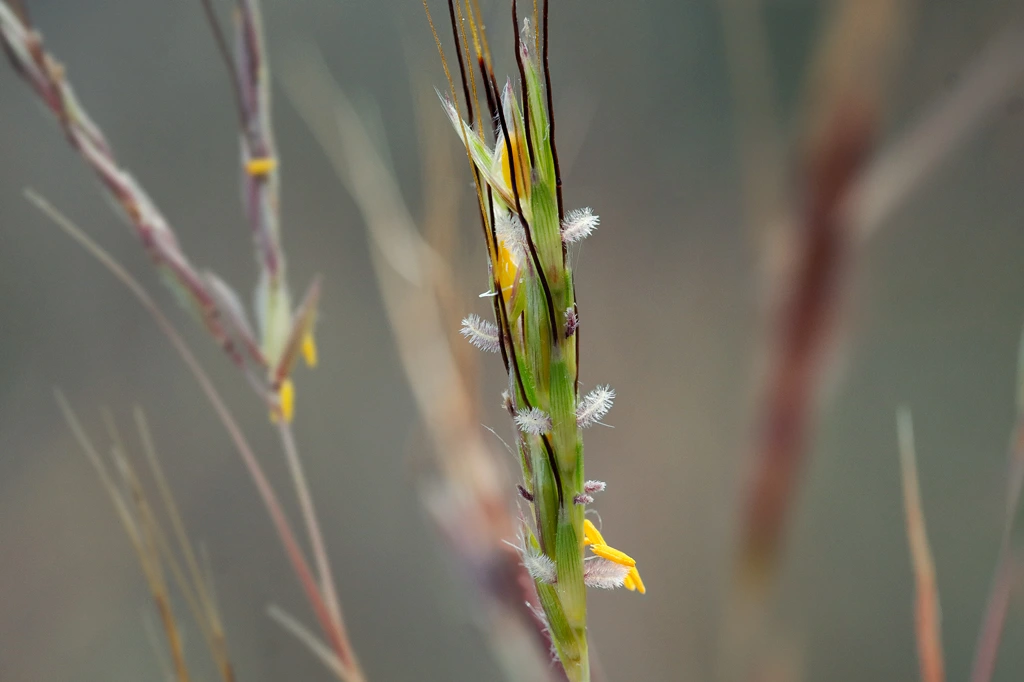
But when you get closer, you see how amazing this looks – Little Bluestem
What Makes Macro Photography Unique
When you learn to observe the world with intentional focus, a fascinating new dimension opens up. That is precisely where macro photography comes in. Macro photography is a specialized discipline focused on capturing tiny subjects at a 1:1 life-size ratio on the camera sensor—meaning one centimeter of your subject corresponds exactly to one centimeter on the sensor.
To capture this level of detail, a dedicated macro lens is essential. These lenses boast unique characteristics like:
- Short Minimum Focus Distance: Typically 30 centimeters or less, allowing you to get extremely close to your subject.
- Wide Apertures: Highly light-efficient, letting in ample light for crisp exposures.
- Manual Focus Override: Enables you to fine-tune the focus point manually right after the autofocus locks in, ensuring surgical precision.

A small spider in a pine tree – Celerrimus duffeyi
Actively Training Your Observation Skills
When heading out with your camera and macro lens, you can actively train your brain to spot fascinating subjects much faster:
- The Rule of Five New Things: Turn a familiar route into a treasure hunt. Force yourself to notice at least five details you have never seen before—like a unique brick texture or subtle pavement discoloration.
- Active Narration: Stare intently at a scene for ten seconds, close your eyes, and describe what you saw in as much detail as possible to strengthen visual memory.
- Perceptual Priming: Build your knowledge of local plants, insects, or architectural features. Once your brain understands a concept, it automatically pulls those patterns out of the background noise.
- Sensory Isolation: Focus for two minutes strictly on a single element, such as textures or color contrasts.
- Controlled Slowing Down: Walk 20% slower than usual and maintain a wider gaze. This gives your retina and peripheral vision the time needed to register subtle details.
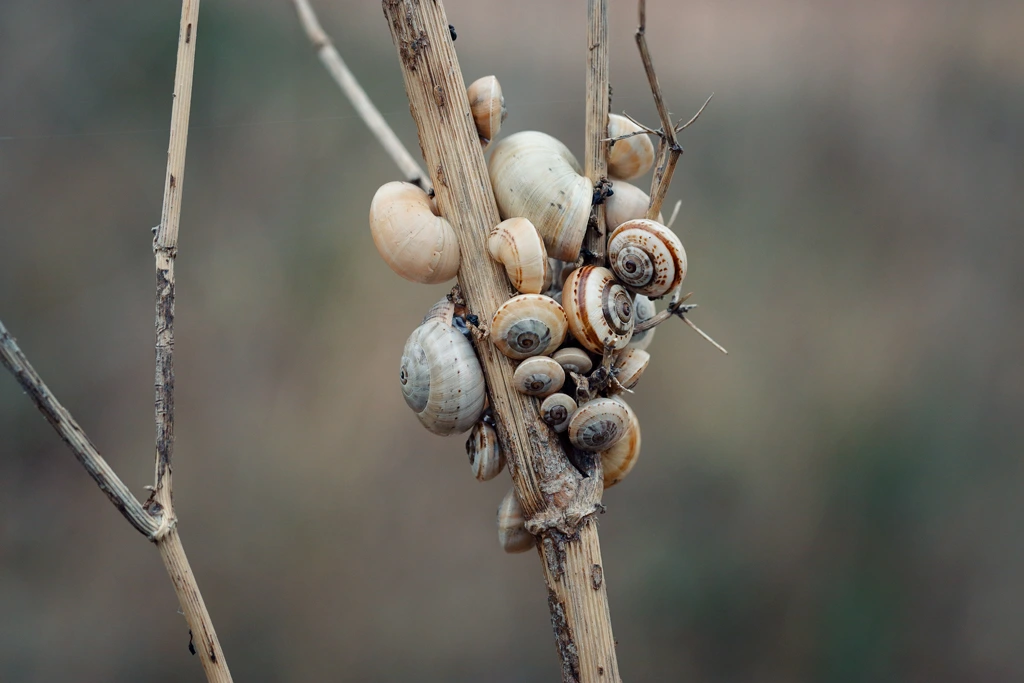
A bunch of snails clumped together on a branch
Anticipation and the Ground-Level View
With regular practice, this heightened awareness becomes second nature; you learn to observe your environment fluidly. Complementing this mental shift with subject knowledge—such as understanding the biology of the plants and insects you shoot—helps you anticipate behavior and capture the perfect frame.
The next time you step outside for a macro session, consciously drop down onto your knees and look at the things you usually ignore or take for granted. Search for the tiny details hidden low to the ground and bring them into focus.
Now, grab your camera, head out, look around and have fun.