Inside the Forgotten Cannery of Mula
Step inside the historic Cofrusa canning factory in Mula through rare interior photos documenting its final days and industrial legacy.
The Industrial Heartbeat of Mula
For decades, the Cofrusa S.A. canning factory served as the primary economic engine for the town of Mula in the Murcia region of Spain. During peak harvest seasons, the expansive facility provided employment for over eighteen hundred workers, processing regional fruits and vegetables around the clock.
Beyond direct employment, an extensive ecosystem of local transport companies, equipment suppliers, and agricultural farms depended entirely on the plant’s daily momentum. Virtually every household in the surrounding community maintained a personal link to the operation, with family members or neighbors contributing to its output. The seasonal rhythms of regional agriculture directly dictated the town’s economic vitality, creating a shared identity deeply rooted in food production.
Shifting Consumer Markets and Industrial Decline
Despite its historical importance, the facility eventually faced insurmountable financial pressures as global market preferences evolved. Factory management struggled to modernize operations and adapt to changing distribution standards. While traditional tin cans offered superior preservation without relying heavily on artificial additives, foreign import markets shifted decisively toward lightweight plastic packaging and vibrant consumer branding.
As international demand for traditional canned goods waned, production volume dropped significantly. Today, the facility remains entirely abandoned, standing as a quiet monument to an era when heavy manufacturing anchored regional employment across rural Spain.
Preserving a Rare Behind-the-Scenes Archive
Documenting the interior of the Cofrusa plant yielded a rare visual historical record that went far beyond typical corporate media. Most industrial firms concentrate solely on polished product photography intended for promotional materials, rarely documenting the working conditions, machinery, or human scale inside their facilities.
Accessing the factory floor provided an unvarnished look at daily industrial life. Some of these original photographs captured minor maintenance issues or operational oversights that rendered them unsuitable for commercial marketing at the time. Nevertheless, these candid images created a valuable historical document that accurately reflects the realities of mid-century factory labor.
Capturing the Silence of Once-Thriving Factory Halls
The photographs captured during the facility’s final years reveal vast, cavernous halls where only a small crew of remaining staff operated among towering, idle machinery. Standing beside silent production lines, these few workers kept remaining orders moving as large sections of the plant were decommissioned.
The stark contrast between the immense physical scale of the building and the handful of active personnel dramatically highlights the final stages of the factory’s decline. Through careful visual documentation, these quiet moments preserve the human legacy of Mula’s industrial history, honoring the generations of workers who built their livelihoods within those walls.
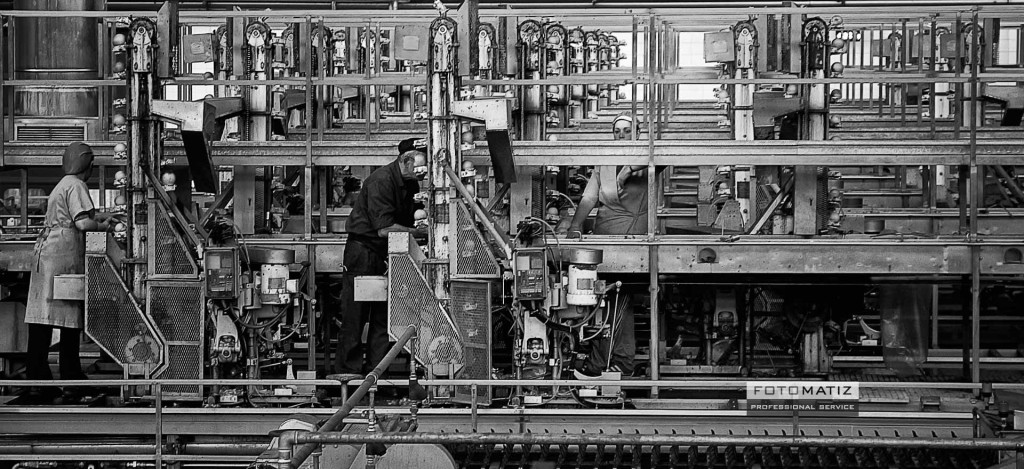
The old can factory of Mula (Spain) was still operational when this photo was shot in 2003. Photograph by Jerome van Passel for Cofrusa S.A.